Epstein File EFTA00000180.pdf 2026
Description
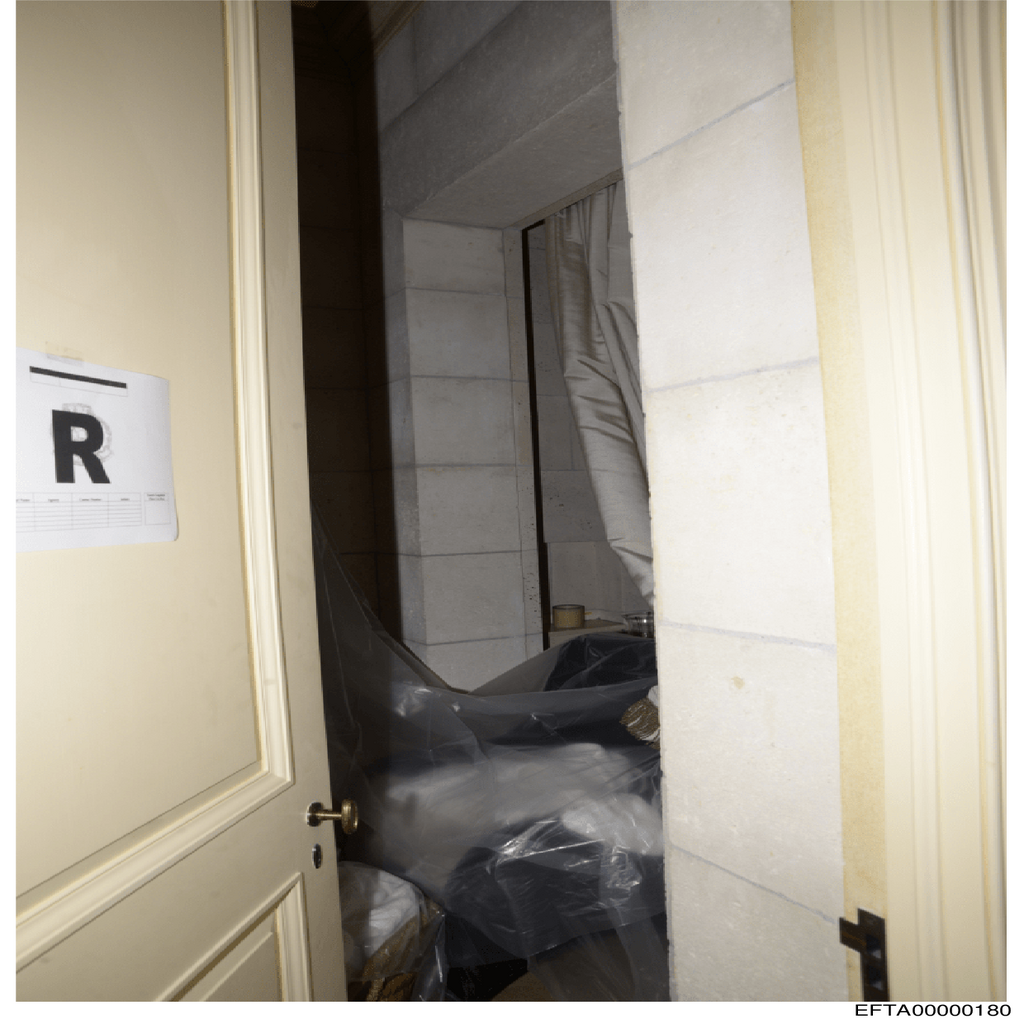
The image presents a narrow, dimly lit space, characterized by a partially open door that reveals a glimpse into a storage or utility area behind it. The architecture showcases solid stone walls, with a smooth, cold appearance accentuated by subtle lines that trace the blocks of stone, evoking a sense of permanence and solidity. The door itself is framed in a muted shade that contrasts gently with its surroundings, featuring a traditional brass doorknob that hints at vintage charm. A large white label affixed to the door displays a bold black letter “R”, suggesting room designation or inventory number, indicative of a structured organizational system. Inside the visible area, the space appears cluttered and somewhat neglected, with a plastic sheet draped over a collection of unidentified objects, likely furniture or equipment, that is obscured from clear view. This plastic covering suggests an attempt to protect the items from dust or possible damage, emphasizing a sense of preservation even within a storage context. The items beneath the plastic appear to be bulky, enveloped in a manner that creates an air of mystery regarding their nature or purpose. Beyond the layer of plastic, there is a hint of beige fabric, possibly upholstery or curtains, which adds texture to the scene and signifies a blend of materials within this confined area. To the right, the continuation of the wall, alongside the edge of the doorframe, reinforces the compactness of the space, while the overall dim lighting casts soft shadows, adding depth and complexity to the composition. Various storage containers or boxes are present, partially visible, and give an impression of haphazard accumulation; their arrangement suggests a temporary state, indicative of a space either in transition or designated for infrequent use. The subdued atmosphere evokes feelings of curiosity and the passage of time, as this area, likely intended for practical purposes, is filled with remnants of past uses. The interplay of light and shadow and the subtle color palette of muted yellows, whites, and earth tones contribute to a sense of quietness and seclusion, making this a space that seems to tell a story of its own, steeped in both purpose and ambiguity. Visitors to the scene are invited to imagine the secrets that lie within, hidden beneath layers of protective coverings and the passing of time. The combination of architectural elements, functional design features, and the enigmatic quality of the contents creates an image that is rich with possibilities for exploration and interpretation, capturing the essence of a place often overlooked yet full of hidden narratives. The entire scene encapsulates the intriguing duality of utility versus mystery, embodying the nature of spaces often relegated to the background yet integral to the broader tapestry of a larger environment. Here lies an invitation for curiosity, prompting the observer to consider not just what is seen, but also what remains concealed, creating a compelling moment suspended in time that holds greater significance in the context of its surroundings.