Epstein File EFTA00000254.pdf 2026
Description
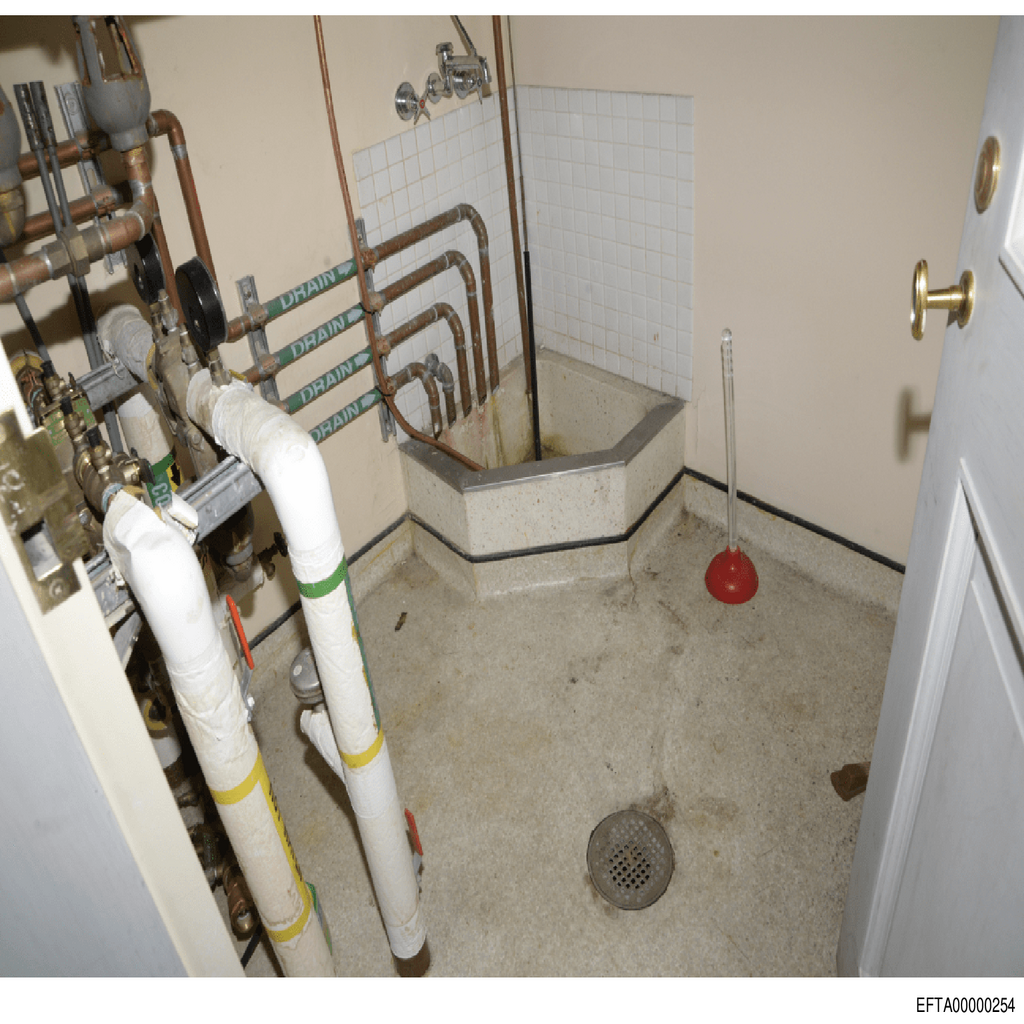
The image depicts a small, utilitarian basement space characterized by a variety of plumbing fixtures and equipment indicative of a functional utility area, likely involved in drainage and water management. Dominating the space is an octagonal-shaped, recessed wash basin or floor sink, situated in one corner and covered with a light-colored, textured surface that exhibits stains and marks suggesting wear and use over time. The tiles on the wall behind the basin are white, creating a stark contrast against the beige paint of the surrounding walls, and the visible plumbing consists of a network of copper pipes resembling a complex web, while the prominent labels on some of the pipes clearly indicate their function as part of a drainage system, contributing to an overall industrial aesthetic. A noticeable feature is the drain located in the floor, revealing a stainless steel grate, which enhances the area’s practicality while hinting at possible water accumulation or previous leaks, as indicated by the subtle discoloration on the concrete flooring that surrounds it. Adjacent to the basin, a bright red plunger stands upright, a tool often used for clearing clogs, further suggesting that this area is indeed designed for maintenance and leakage management. Various segments of PVC pipe, wrapped in a protective foam for insulation, join the copper piping, painted in bright colors such as yellow and green, adhering to safety and identification practices commonly observed in plumbing installations. The room is accessed through a white door, which is partially ajar and fitted with a round brass doorknob, adding a touch of traditional design to the otherwise functional layout. The overall impression of the area conveys a sense of practicality and readiness for plumbing tasks, with numerous functional components coexisting in a seemingly organized yet cluttered manner, making the space essential for daily operations and maintenance tasks regarding water flow and drainage management within a residential or commercial setting.