Epstein File EFTA00000352.pdf 2026
Description
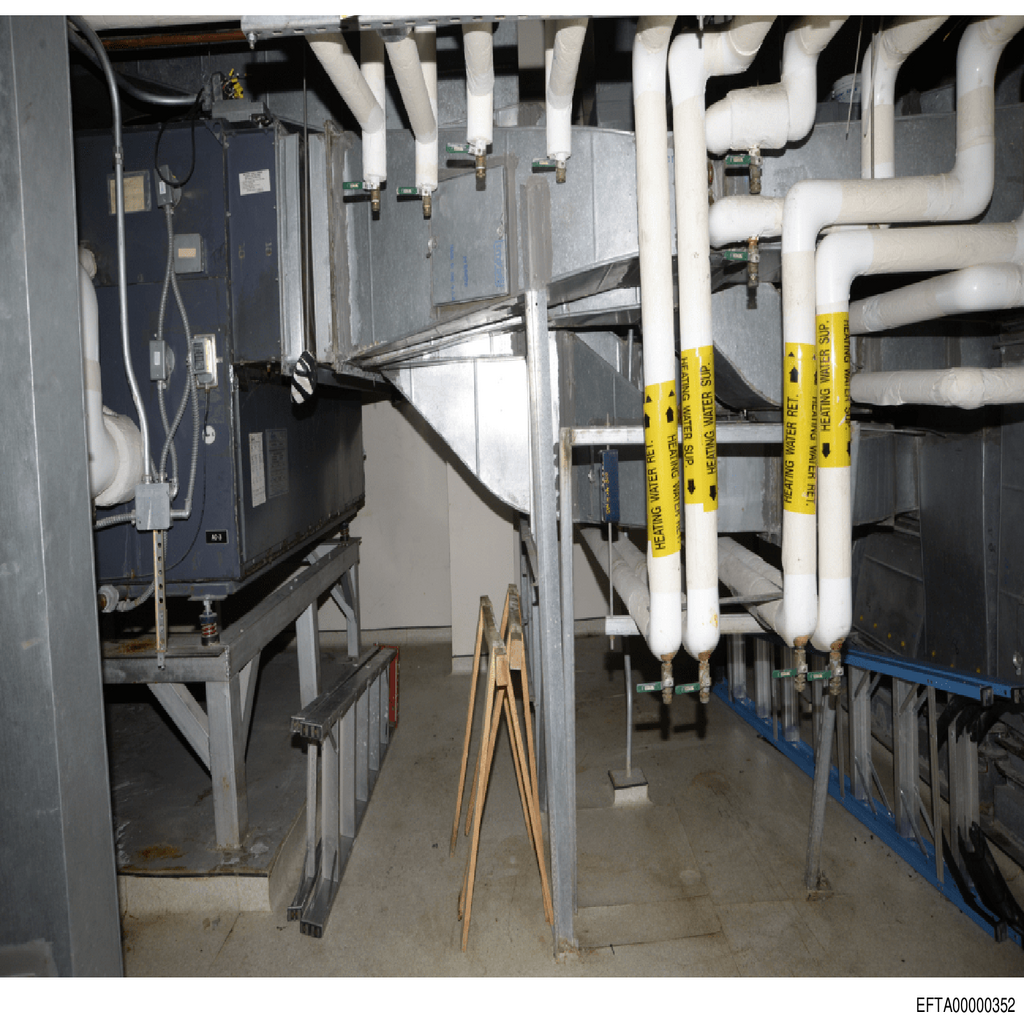
The image depicts an industrial mechanical room characterized by extensive piping and ventilation systems that are typical of commercial building infrastructure. Dominating the scene is a large, rectangular mechanical unit, possibly a chiller or heater, which sits on a sturdy metal frame. This unit features multiple compartments, with visible electrical components and control panels that include gauges and switches, suggesting its role in managing temperature and air quality. Adjacent to this mechanical unit, a network of insulated white pipes runs along the ceiling and walls, indicating the transport of heated or chilled water throughout the building. The pipes are prominently labeled with bright yellow bands, clearly marked with instructions such as “HEATING WATER SUPPLY” and “HEATING WATER RETURN,” ensuring easy identification for maintenance and service personnel. Each connection point is equipped with small green valves, which serve to control the flow of water, vital for the efficiency of the heating and cooling systems. The color contrast of the yellow labels against the white piping enhances visibility, signifying the importance of these clear designations in potentially high-traffic and operationally critical environments. The floor of the room is made of smooth concrete, which appears to be in functional condition but shows signs of wear, including scratches and minor stains, hinting at the heavy use this space endures. Alongside the large mechanical unit, a series of metal steps and ladders are strategically positioned to provide access for maintenance tasks, emphasizing the industrial nature of this facility. In the background, less defined structures can be seen, with less focus, which may include additional mechanical equipment or the outline of walls leading to other areas of the building. The overall environment radiates a sense of industrial efficiency, incorporating elements designed for functionality, safety, and ease of maintenance. The presence of adequate clearance and organization within the space reflects a well-planned layout, facilitating effective operation within an essential building system, ensuring optimal performance in controlling the environment. The mechanical room serves as a critical hub, representing the backbone of modern climate control systems, essential for maintaining comfort and operational efficiency in larger commercial or institutional settings. The combination of mechanical, electrical, and plumbing elements showcases the complexity of building systems, indicative of the engineering requirements that support modern infrastructure. This room is a vital part of the facility, underscoring the importance of well-maintained mechanical systems in promoting safety, energy efficiency, and reliability. The image encapsulates not only the physical components but also the underlying principles of operational excellence in contemporary building management.