Epstein File EFTA00000361.pdf 2026
Description
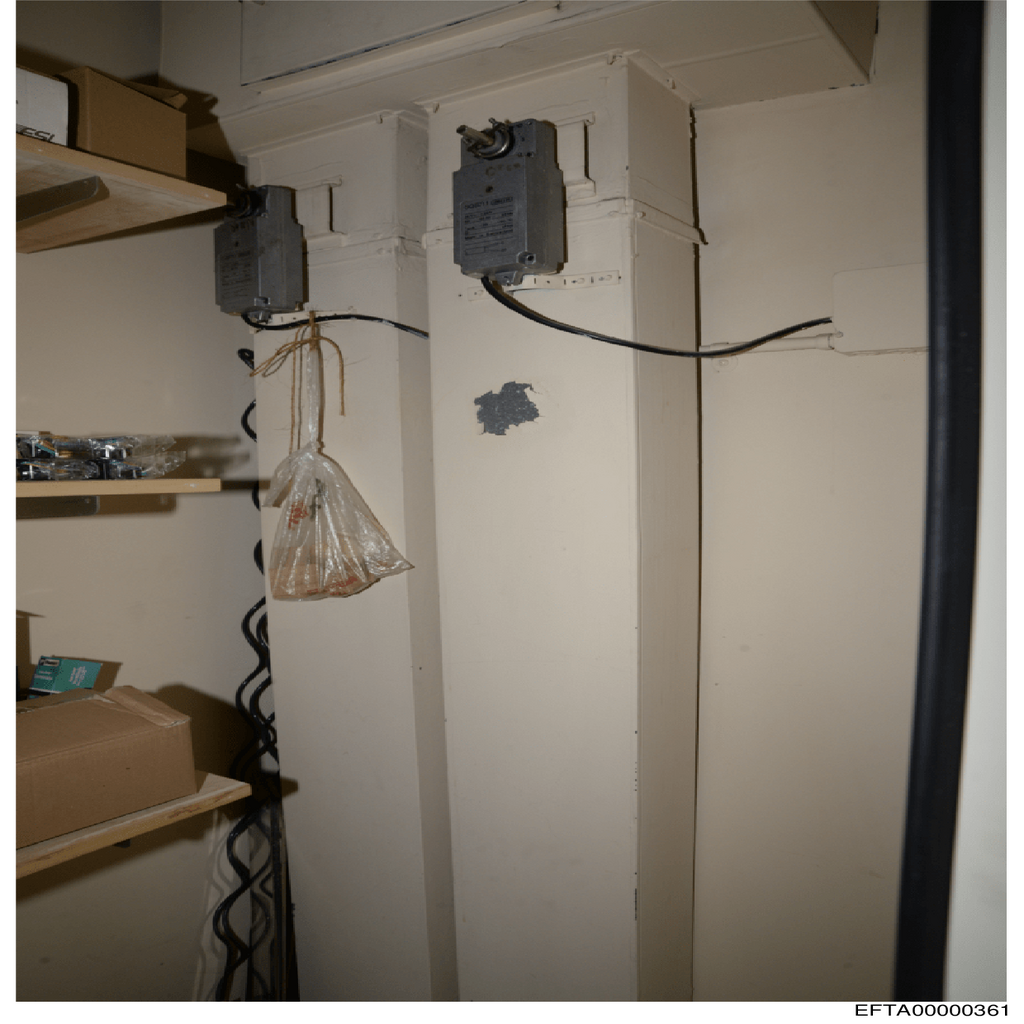
The image presents a storage or utility area characterized by several distinct elements, creating a sense of organized disarray typical of functional spaces. Dominating the scene are two vertical metal structures, likely electrical control panels or junction boxes, mounted against a neutral beige wall that contributes to the industrial ambiance. Each panel is equipped with a gray metal housing, firmly affixed and exhibiting a weathered patina that suggests age and prolonged use. Small, intricate labels or instructions can be seen affixed to the panels, indicating functionality related to electrical operations or wiring systems, underscoring the technical nature of this environment. Adjacent to the panels, a thin, spiraled black cable descends, weaving downwards along the wall and perhaps connecting to devices or outlets hidden from view, emphasizing the network of electrical configurations that underlie this setting. Suspended from one of the panels is a clear, plastic bag, delicately tied with a piece of twine, hanging at an angle. This bag contains a collection of small, metallic objects, perhaps hardware components or fasteners, hinting at utility and practicality within the workspace. The clear plastic allows a glimpse into its contents, fostering intrigue about the items and their purposes, creating a narrative of maintenance or assembly tasks that might be ongoing in this area. To the left, storage solutions blend into the background, with a beige shelf that extends horizontally, holding an assortment of boxes and various tools, some partially visible. The boxes appear to be simplistically designed, likely containing equipment or spare parts, indicative of a workspace that prioritizes functionality over aesthetics. A small assortment of metallic components, perhaps screws or brackets, rests on the shelf, reinforcing the theme of preparedness for mechanical or electrical tasks. Scattered across the surface, these items speak to a diligent routine of repairs or installations that take place in this space, adding layers of purpose to the otherwise understated environment. The overall composition encapsulates a mix of industrial efficiency and practical storage solutions, where every element serves a distinct purpose in the context of repairs or mechanical tasks. The muted color palette of beige and gray, complemented by the subtle sheen of the metallic elements and the transparent plastic, fosters a serene yet utilitarian atmosphere, allowing for easy navigation and accessibility. Each component within the frame tells a story of functionality, suggesting this area is a hub of activity where maintenance, assembly, or possibly even troubleshooting occurs regularly. The image conveys an essence of order within potential chaos, reflecting a workspace dedicated to efficiency and practicality, where personnel can quickly access tools and parts necessary for various tasks. The worn appearance of the materials and surfaces suggests a history of diligent work, where time has left its mark in the form of scuffs and imperfections, contributing to the character of this functional environment. The carefully organized chaos, combined with the understated colors and visible tools, establishes a strong narrative for anyone who might enter this space, hinting at the complexities of operations that occur within these humble confines. This image, thus, captures a moment frozen in time, inviting observers to appreciate the subtleties and stories that exist in spaces often overlooked yet brimming with possibility.