Epstein File EFTA00000430.pdf 2026
Description
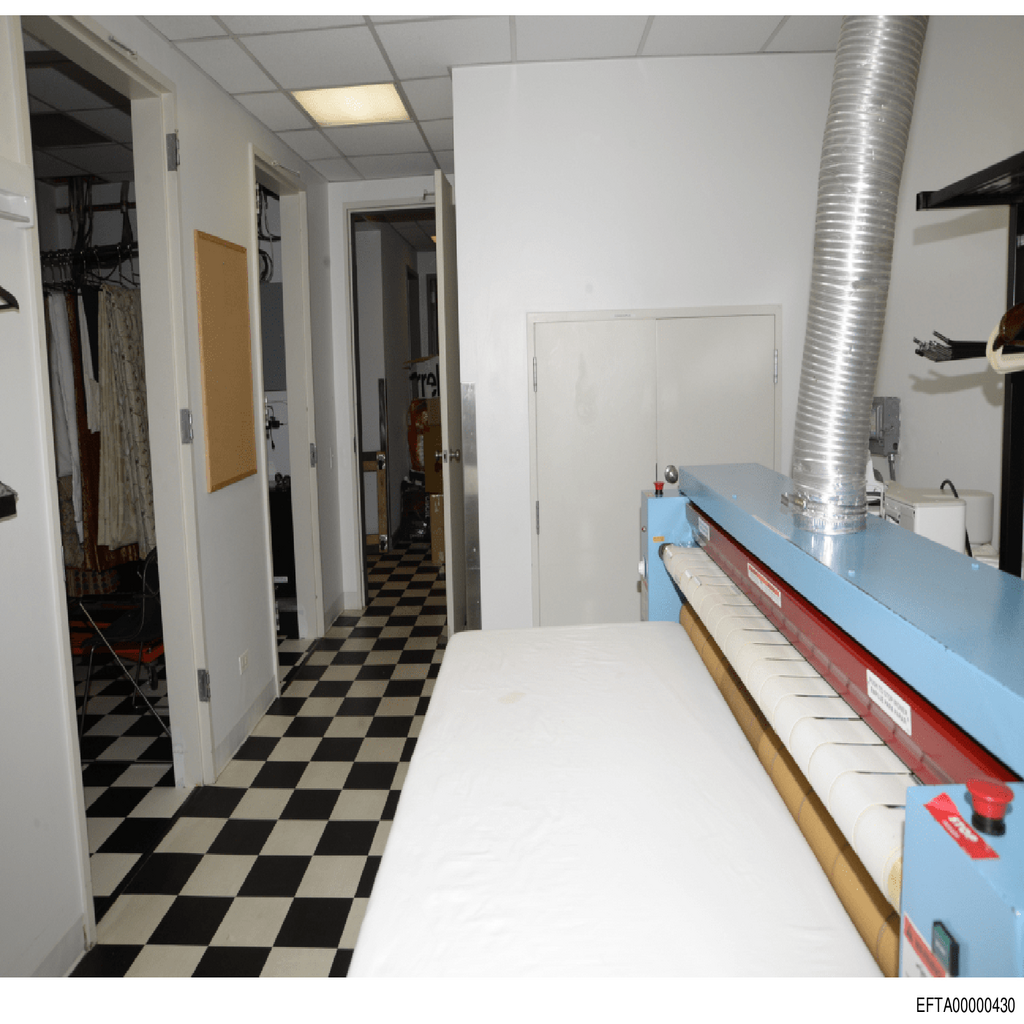
The image showcases a commercial or industrial workspace, likely within a textiles or garment manufacturing facility, characterized by a clean, spacious environment equipped with specialized machinery. In the foreground of the scene, a flatbed press or finishing machine is prominently displayed, featuring a long, white, smooth surface that is likely designed for fabric or garment processing, demonstrating its potential for pressing, smoothing, or finishing textiles. The machine's vibrant blue and red color scheme stands out against the predominantly neutral background, highlighting its industrial functionality. The large cylindrical component, which appears to be an exhaust or ventilation duct, extends from the top of the machine, suggesting the importance of maintaining air quality and temperature while working with fabrics. Directly adjacent to this machine, the workspace features a pristine, white table surface, which is likely used for layout or preparation of the materials before they undergo processing. In the background, a series of doors, indicated by their framed edges and contrasting colors, leads to various other rooms or storage areas, hinting at a larger operational area designed for different tasks such as storage, wardrobe, or even additional fabric treatment. The floor is patterned with alternating black and white tiles, contributing to the utilitarian yet polished aesthetic of the space; this flooring choice often allows for easy maintenance and cleanliness, which is essential in environments dealing with textiles. The walls are painted in a soft, neutral shade, creating a bright and airy ambiance that enhances visibility and concentration in the workspace. To the left side of the image, there appears to be a hanging wardrobe or rack, likely utilized for storing finished garments or materials that are waiting to be processed, showcasing the organizational aspect of the work environment. The area is well-lit, indicating a commitment to safety and efficiency, as proper lighting is crucial for detailed work often involved in textile processing. The absence of clutter reinforces the organized nature of the space, suggesting a methodical approach to handling materials. In addition to the visible equipment, the surroundings may contain tools or machinery essential for fabric cutting, sewing, or other textile treatments, all of which are integral to the production process. Overall, the image captures an intricate blend of functionality and organization in a professional setting, highlighting the critical tools and workflows essential to the textile or fashion industry, while offering a glimpse into the processes that contribute to garment construction and refinement in a commercial context. The layout and architectural elements of the room are designed not just for efficiency, but also for facilitating collaboration and communication among workers, reflecting the dynamics of a contemporary industrial workspace.