Epstein File EFTA00000433.pdf 2026
Description
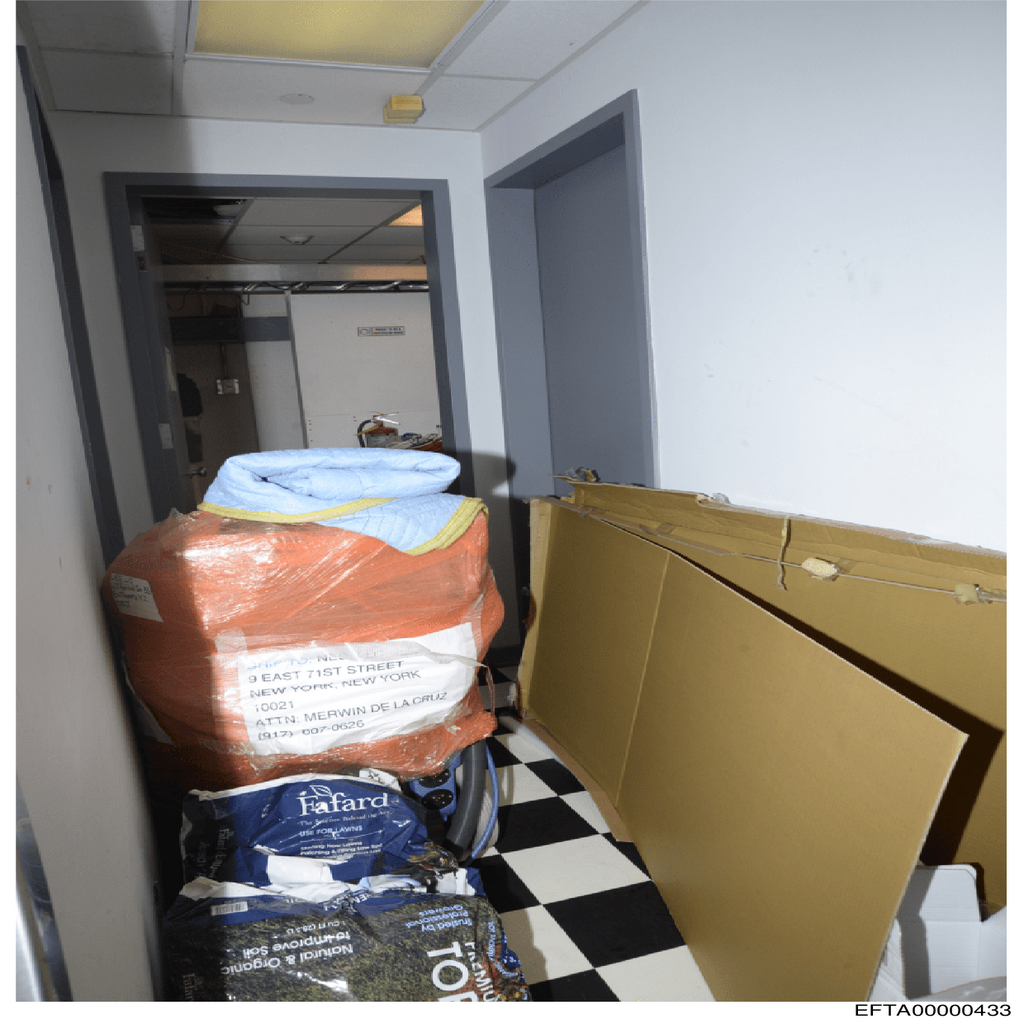
The image captures a narrow hallway brimming with a variety of items and clutter, creating a confined and disorganized atmosphere. The walls are painted in a muted light gray, contrasting with the darker gray accents of the doorways that frame the passage. The ceiling, paneled with fluorescent lighting fixtures, casts a clinical glow over the space, illuminating the assortment of materials and objects that line the hallway. On the left side, a large, orange and blue bundle is prominently displayed, resembling a covered piece of furniture or a collection of blankets, which could signify either relocation or storage awaiting organization. Beneath this bundle, there are several bags labeled with “Fafard,” indicating gardening or planting products, perhaps soil or mulch, hinting at a connection to gardening or landscaping activities. The bags are neatly stacked atop a cylindrical shape, likely a planter or another storage container, representing an effort to maximize vertical space within this constrained corridor. Adjacent to these items is a large cardboard parcel, flat against the wall, which appears oversized and is likely denoting packaging materials or boxes that may be utilized for packing or storage purposes. This cardboard adds to the visual complexity of the scene, contributing to the overall sense of temporary disarray as if this space is in transition. The floor is adorned with a classic black-and-white checkerboard pattern, a nod to traditional design elements which contrasts starkly with the modern utilitarian array of items present. Beyond the cluttered view, an open doorway in the background leads to an undisclosed area, suggesting further space beyond this cramped setting that may hold additional objects, materials, or even administrative operations. The shadow play from the overhead lighting further emphasizes the depth of the corridor, creating a layered effect that engages the viewer’s eye while simultaneously inviting curiosity about the function of this space. Overall, the scene encapsulates themes of chaos, storage, and potential, presenting a vivid tableau that tells a story of an active, dynamic environment possibly associated with maintenance, renovation, or simply the bustling life of urban existence, epitomizing a transitional point between organization and disorder. This image serves as a valuable representation of urban life and the challenges of space management within a confined environment, making it rich with themes for discussion and exploration.