Epstein File EFTA00000447.pdf 2026
Description
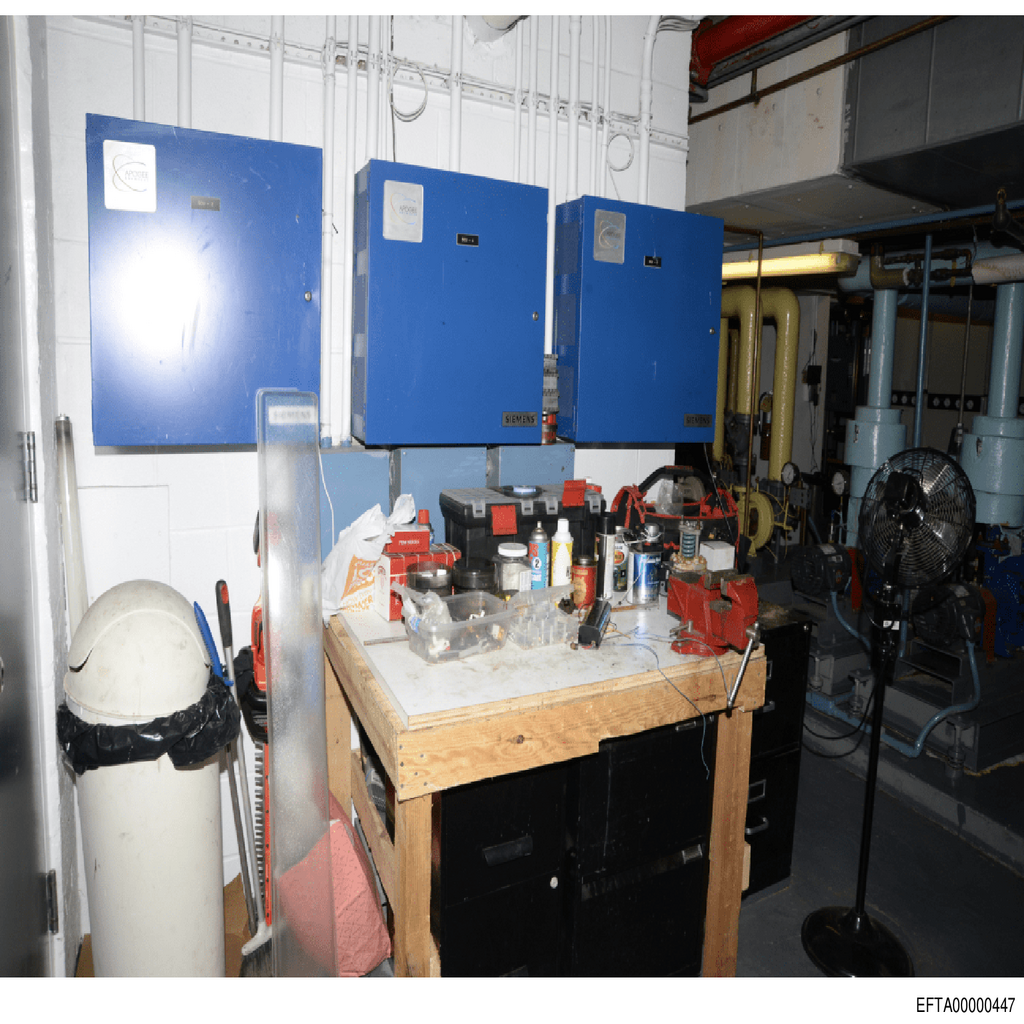
The image depicts a work area within a utility or mechanical room characterized by a combination of storage solutions and operational equipment. Dominating the left-hand side of the image is a large, round, white waste container featuring a black plastic bag encircling the base, which is complemented by various cleaning tools, such as a broom and dustpan visible nearby. Adjacent to this waste bin is a semi-transparent safety shield, possibly designed to offer protection while operating machinery or performing maintenance tasks. The central focus of the image is an expansive, wooden workbench, characterized by its simplistic design and rugged surface, on which an array of tools and materials are scattered. The tabletop displays a mixture of miscellaneous items, including spray cans, small plastic containers, and jars, suggesting ongoing maintenance or repair activities, while a prominently placed red tool, likely a clamp or a grip device, signals potential mechanical adjustments. Situated directly beneath the work surface are several black storage drawers, organized yet slightly askew, hinting at frequent access. Behind the workbench, a series of large blue electrical control panels are mounted on the wall, indicative of electrical systems management or monitoring—these panels prominently feature corporate branding, including a Siemens logo, underscoring the industrial nature of the workspace. Beyond the panels, visible pipes painted in shades of yellow snake along the walls and ceilings, contributing to the mechanical aesthetic of the room. Additionally, industrial fans are placed strategically throughout the area, such as a standing fan on the right side of the workspace, likely combating heat generated by the equipment or providing ventilation in a typically enclosed environment. The background is supported by additional piping and gauges indicative of a broader mechanical system—potentially for heating, cooling, or other operational utilities—denoting an atmosphere filled with industrial machinery. The lighting in this utility area is somewhat muted, emphasizing the functional design and the utilitarian purpose of the space, which is optimized for mechanical tasks and equipped with the necessary tools and storage for effective maintenance operations. The overall impression is one of a bustling work area, meticulously organized yet exhibiting the casual disorder typical of a space frequently used for hands-on tasks. This environment is ripe with the scent of metal, oil, and machinery, encapsulating a dynamic atmosphere conducive to technical repairs and engineering activities while projecting the essence of industrial productivity within a contained setting.