Epstein File EFTA00000453.pdf 2026
Description
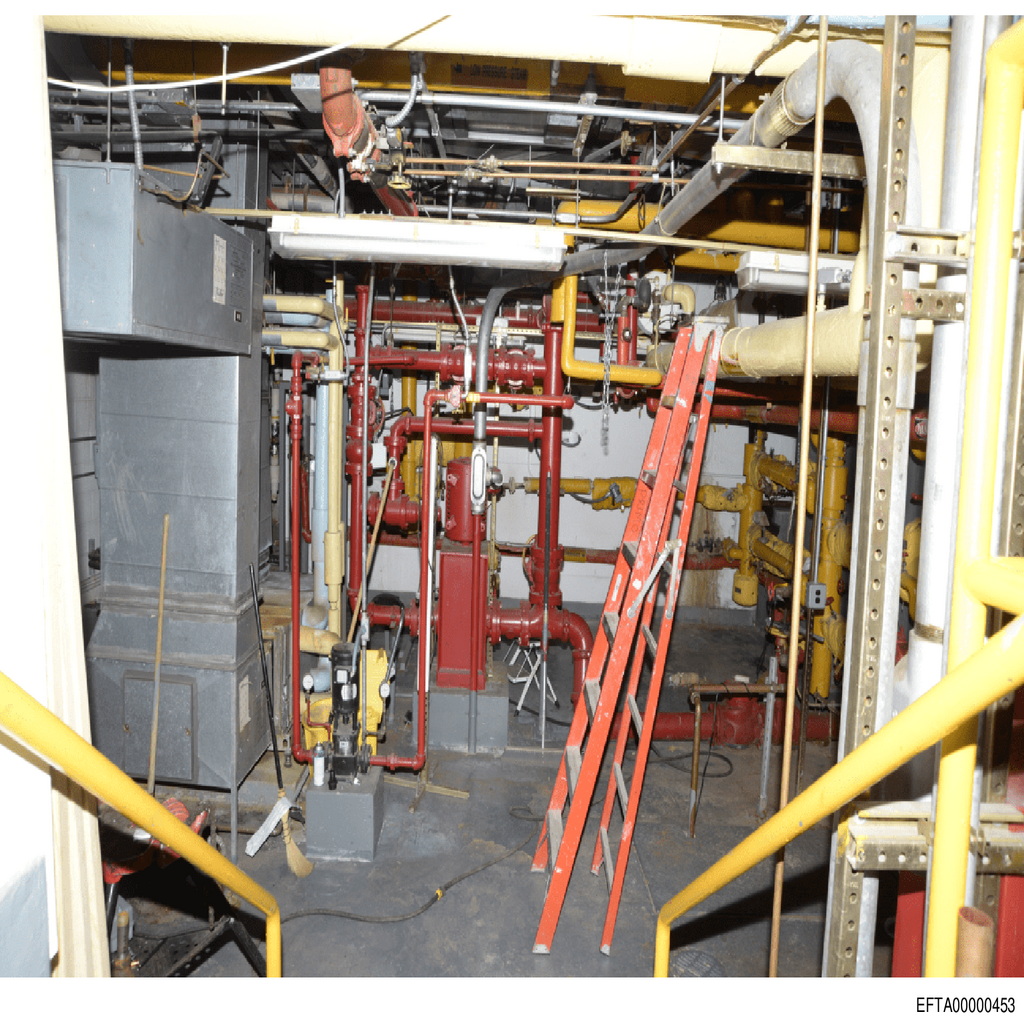
The image depicts an industrial utility space characterized by a complex network of pipes, valves, and mechanical systems indicative of a facility's infrastructure for heating, cooling, or fluid transport. Prominent in the foreground is a bright orange ladder leaning against a series of interconnected piping systems, which exhibit a vibrant palette of colors including red and yellow, commonly used to signify various utilities such as gas and water. The room's surfaces are lined with a plethora of insulated pipes, showing intricate arrangements in a seemingly chaotic yet meticulously organized manner, typical of mechanical rooms in commercial or industrial settings. The pipes are finished in varying textures, some being smooth and shiny, while others may have a matte finish, suggesting different materials or applications. The ceiling is lined with additional ductwork and suspended piping, highlighting the complexity of the space, where overhead systems may route air or fluids to different parts of the building. The ambient lighting is overhead fluorescent, illuminating the metal surfaces and casting shadows that accentuate the depth of the installation. Against one wall, a large metallic enclosure is visible, likely a mechanical unit such as a HVAC system or pump, with clear indications of operational equipment such as electrical panels, gauges, or control valves. The floor is concrete, displaying signs of wear consistent with industrial usage; the surface is devoid of decorative features, focusing instead on functionality. In the background, traces of natural light filter through, hinting at an external environment beyond this enclosed space. The organization and visibility of several valves and controls suggest an operational area where maintenance and monitoring take place frequently, underscoring the importance of regular upkeep in ensuring system reliability. Overall, this room encapsulates the essence of industrial engineering design through its intricate assemblies of hardware, engineering foresight, and the high stake nature of building management systems. The overall composition effectively illustrates a vital aspect of infrastructure rarely seen by the general public, emphasizing the critical role of such systems in maintaining safety, efficiency, and functionality across various facilities. Keywords such as industrial infrastructure, mechanical systems, HVAC equipment, piping network, valve assemblies, maintenance access, and structural design all come to the forefront when considering the significance of this image within the context of industrial operations.