Epstein File EFTA00000533.pdf 2026
Description
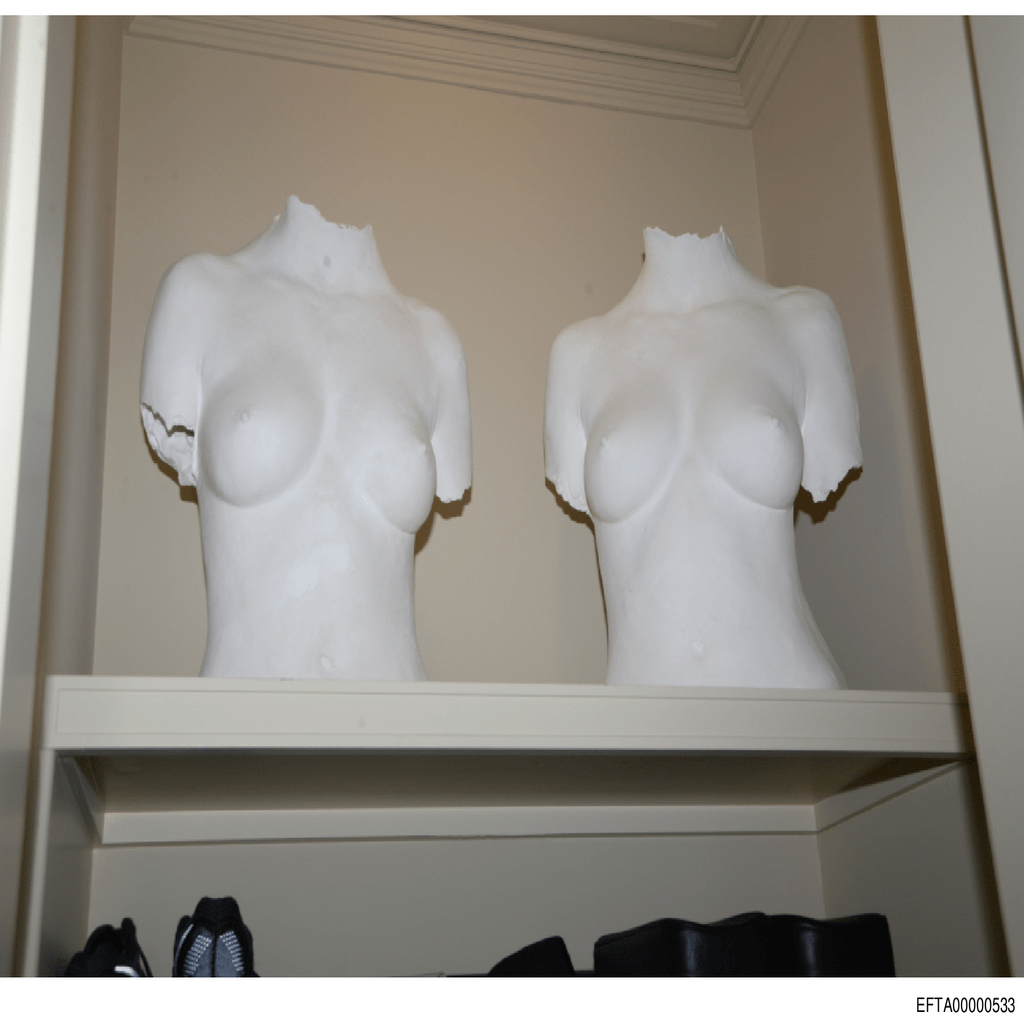
The image showcases a minimalist display featuring two white plaster torso mannequins positioned on a narrow, beige shelf, creating a striking visual contrast within an interior space. The torsos lack heads, presenting an abstract and artistic interpretation of the human form, emphasizing the smooth contours and anatomical features of the upper body. Each mannequin exhibits a subtly graceful posture, capturing the elegance of the female silhouette, with well-defined curves and proportions that highlight the shoulders, breasts, and waist. The surface of the mannequins is matte, free from any paint or embellishments, which enhances their sculptural quality, allowing the viewer to appreciate the texture and craftsmanship of the plaster material. Seated on the shelf beneath the mannequins are assorted items, likely footwear, identifiable by their black color and athletic design, providing a functional backdrop that enriches the artistic presentation. The soft lighting in the environment gently illuminates the figures, casting a faint shadow that adds depth and dimension to the scene. The overall aesthetic is modern and sophisticated, hinting at themes of fashion, artistry, and the human form, while inviting viewers to reflect on the representation of mannequins in retail and art. The absence of heads on the torsos further cements an ethereal quality, provoking thought regarding identity, individuality, and the nature of representation in contemporary design. The careful arrangement of these mannequins within a structured shelf space suggests intentional display, potentially within a boutique, gallery, or private collection where the intersection of utility and art can be explored. The juxtaposition of the smooth, white sculptures against the soft beige background enhances their prominence, making them focal points within the space, while the surrounding elements remain understated, creating a curated visual experience. Such juxtaposition fosters a dialogue about femininity, fashion, and art, urging viewers to consider how mannequins serve as both functional objects and artistic expressions, blurring the lines between reality and representation in context. The scene reflects a blend of modern aesthetics, with clean lines and a neutral palette that can appeal to various aesthetic preferences, rendering the image not only a study of form but also a commentary on the evolving role of mannequins in our visual culture. The overall composition remains balanced, with the neatly arranged elements emphasizing harmony and inviting contemplation on the relationship between art and commerce, identity and abstraction.