Epstein File EFTA00000547.pdf 2026
Description
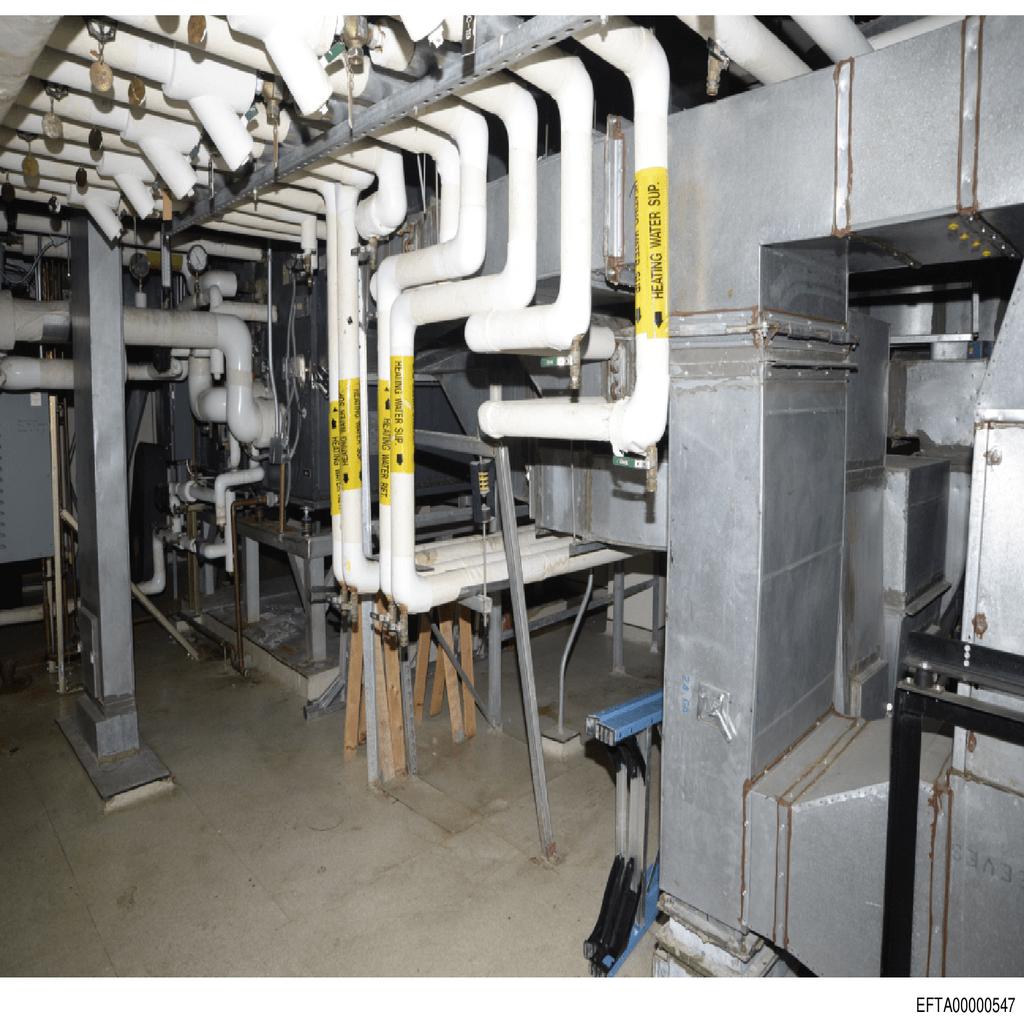
The image depicts a complex and detailed view of a mechanical room or utility space, characterized by an intricate network of white PVC piping that seamlessly intertwines with various metallic components, highlighting the essential infrastructure of a building's heating system or HVAC (heating, ventilation, and air conditioning) setup. Dominating the top of the frame, numerous white pipes extend gracefully across the ceiling, signifying the movement of heating water, evidenced by the prominent yellow labels that are affixed to specific pipes, clearly indicating their function in the overall system. These labels, marked with phrases like “HEATING WATER SUPPLY” and meticulously positioned for quick identification, contribute to the overall organization and safety of the environment. Below the overhead piping system, the floor is composed of a sturdy concrete surface that appears clean yet shows slight markings of wear, which is common in such functional areas. The layout reveals an organized space where structural steel supports, likely made of galvanized metal, provide sturdy anchorage to the piping and other mechanical components, ensuring a robust foundation for operational efficiency. To the left side of the image, a dark panel box stands, possibly housing electrical controls or circuit breakers integral to the system's functionality, suggesting a thoughtful arrangement of electrification alongside the pneumatic elements. Meanwhile, plastic piping continues to be a focal point, showing various bends and intersections that are typical in a complex network tasked with distributing heated water through designated channels. This configuration is strategically designed to optimize heat transfer and maintain a consistent temperature within the building, thereby maximizing energy efficiency. Interspersed among the plumbing are a series of metallic junction boxes connected to ducts or air handling units; the silver-grey finish of these parts contrasts sharply with the pristine white of the pipes, emphasizing the layered complexity of the engineering at play. The arrangement hints at a meticulous design approach with clear access points for maintenance and operational checks, facilitating ongoing performance monitoring. At the base of the infrastructure, wooden supports are visible, used to elevate certain portions of the piping, indicating a consideration for alignment and stability. The interplay between the metal ductwork and the white PVC pipes creates a visually appealing geometric arrangement, demonstrating the harmony of function and form in mechanical design. Furthermore, this utility space is illuminated by artificial lighting, providing a backdrop that emphasizes the metallic sheen of the ducts and the starkness of the plumbing connections while ensuring that no shadow pockets obscure operational areas. Overall, this intricate depiction of an HVAC mechanical room showcases a well-organized, efficient system designed to deliver and regulate heating essentials effectively, embodying the principles of modern engineering and facility management in a bustling infrastructure. The clear labeling, precise arrangement, and thoughtful accessibility reflect best practices in system installation, aiming for both operational efficiency and safety within the utilitarian space. As a whole, this image serves as a powerful representation of the unseen yet crucial elements that contribute to the comfort and functionality of interior spaces, highlighting the importance of efficient HVAC systems in today's architectural designs.