Epstein File EFTA00000550.pdf 2026
Description
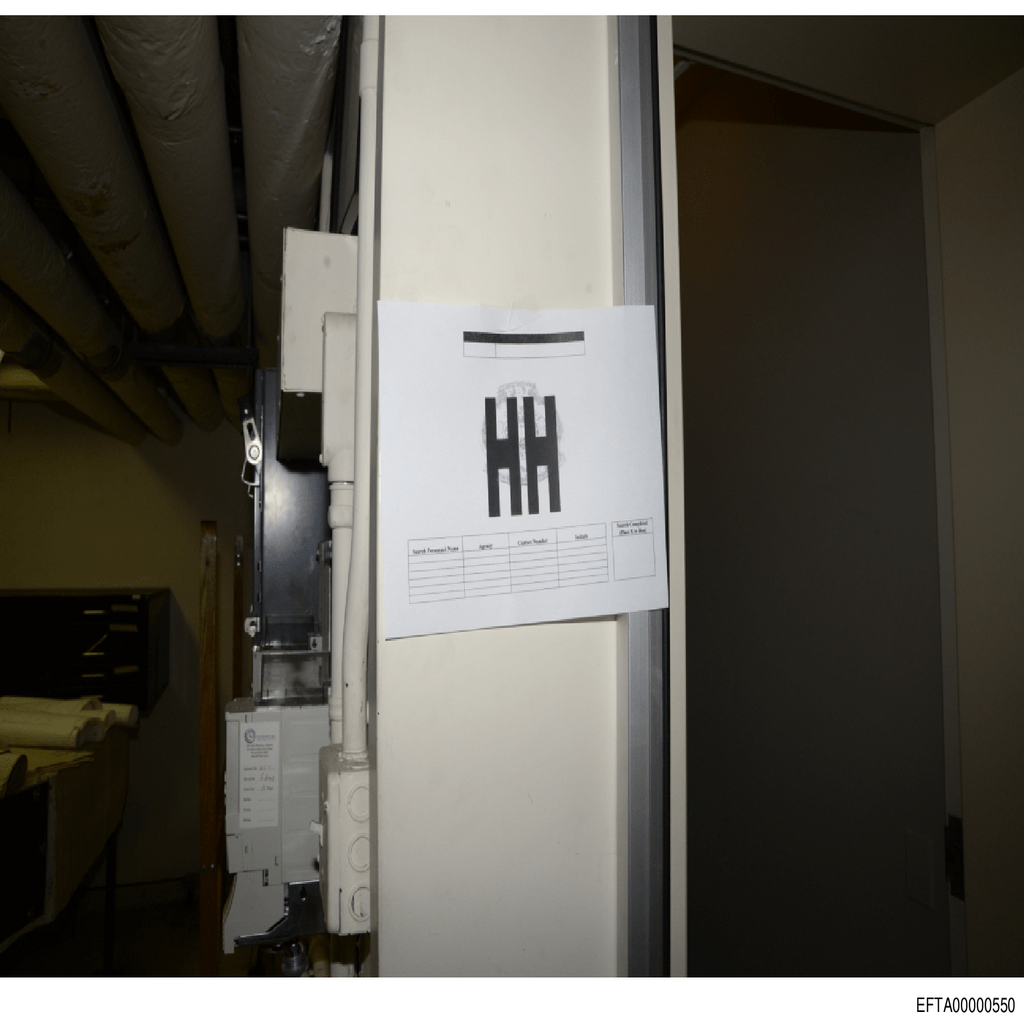
The image presents an industrial setting characterized by structured elements and functional signage relevant to a mechanical or engineering environment. At the forefront, a prominent piece of white paper is securely attached to a wall, showcasing a stark black graphic prominently displayed in the center featuring two large stylized letters “H”, which may signify a specific identifier, a code, a reference number, or designate a particular area or function relevant to the workspace. The paper appears slightly creased and well-utilized, indicating familiarity and routine use, serving as critical communication within the facility. Below the lettering, three rows of blank boxes suggest that this sign may also serve as a record-keeping tool or an inventory checklist, with designated spaces for names, aging elements, current transfer, and health conditions, indicating an organized approach to monitoring or managing resources, equipment, or personnel. The edge of the paper is subtly bordered in black, framing the text and enhancing visual clarity, which is essential in professional settings where quick comprehension is necessary. Adjacent to the sign, unseen pipes run along the ceiling, potentially embodying a network of refrigeration, heating, or ventilation systems, indicative of an industrial infrastructure designed to support operational efficiency. The metallic casing on the left suggests additional machinery or electrical components, presenting a mechanical aesthetic with functional apparatus, while the soft ambient light reflects off these surfaces, creating shadows that enhance depth in the image. The walls are painted in a neutral tone, likely to maintain a clean and professional appearance, and to minimize distraction from critical signage and operational elements. To the right, a partially visible door implies access to another area of the facility, raising questions about the contents or functions contained beyond this immediate space. The overall composition of the scene encapsulates a thoughtfully arranged environment tailored for operational efficiency, emphasizing the balance between practical signage and essential machinery that define the workplace's rhythm, grounded in safety, procedure, and organizational protocol, while conveying a sense of diligence and order prevalent in engineering or logistical operations. This imagery encapsulates themes of automation, industrial oversight, maintenance records, and spatial organization as integral components that influence a workspace designed to facilitate productivity and ensure systematic workflow throughout the facility, underscoring the importance of clear communication tools such as notice boards or operational signage in maintaining cohesion among personnel and processes.