Epstein File EFTA00000635.pdf 2026
Description
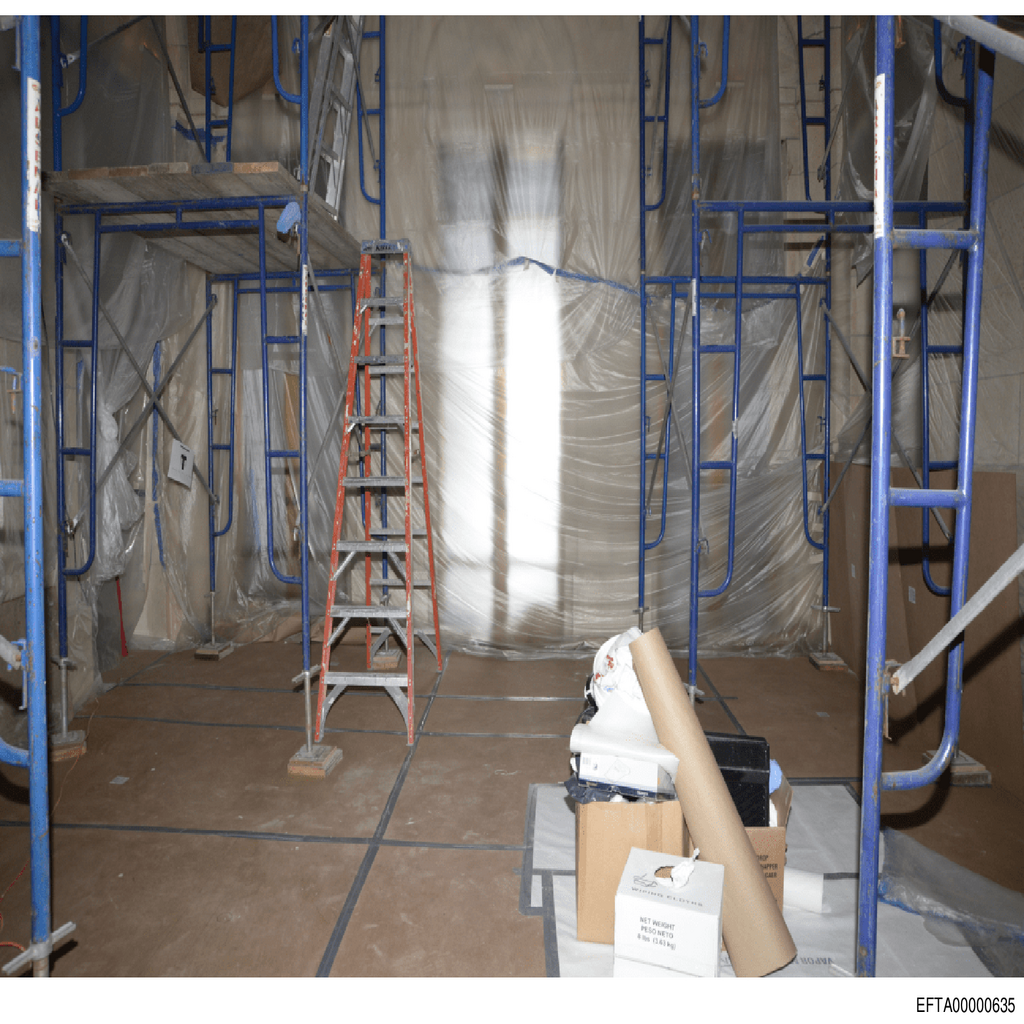
The image showcases a partially constructed interior space, likely undergoing renovation or construction, characterized by a distinct atmosphere of activity and transformation. Central to the scene are two prominent ladders, one being a tall red extension ladder and the other a metallic scaffold ladder, serving as practical tools for workers in this dynamic environment. The red ladder is strategically positioned against the backdrop of a wall shrouded in translucent plastic sheeting, indicative of protective measures taken to contain dust and debris while renovations are underway. Surrounding the ladders, a framework of blue scaffolding creates a sturdy structure that allows for efficient access to elevated areas, enhancing the workspace for contractors or maintenance personnel tasked with the project's completion. The scaffolding is meticulously placed at various heights, suggesting an effort to balance safety and accessibility for the workers navigating this construction zone. The floor beneath is primarily composed of bare wooden planks, clearly marked with black tape outlining specific sections of the area, possibly indicating designated work zones or preventing access to areas deemed unsafe. This visual cue emphasizes the organized chaos synonymous with construction sites, where safety and efficiency are paramount. Scattered across the floor are various construction materials and tools, including boxes, rolls of protective paper, and loose items, hinting at a process still in progress. A beige cardboard box sits prominently, while a rolled-up tube of material is also evident, implying preparations for future tasks that range from painting to flooring. In the background, light filters through the plastic sheeting, casting a soft glow and producing a contrast against the otherwise stark environment of the construction site. This interplay of light and shadow adds depth to the image, enveloping the scene in a faintly surreal atmosphere as the transformation from raw space to finished structure unfolds. The overall setup conveys a narrative of structured disorder, where every element, from the ladders and scaffolding to the surface materials and protective wrappings, contributes to the overarching theme of construction and renovation. The use of plastic sheeting suggests a focus on maintaining cleanliness and minimizing disruption, a common practice in environments where refurbishment work takes place. This also illustrates the builders’ intent to safeguard existing elements from potential harm during the renovation tasks. The plastic, draped loosely around the scaffolding, also hints at the amount of preparation that goes into a renovation project, reinforcing the notion that construction is a layered process, with considerations for both function and aesthetics. Overall, the image encapsulates a moment within a transitional space, a representation of hard work, organization, and the anticipation of change. Each object and element within the frame plays a vital role in the narrative of renovation, contributing to an understanding of the complexities involved in transforming a space. The tools, materials, and protective measures converge to highlight the labor-intensive efforts that form the foundation of construction projects, ultimately shaping the site into a fully realized environment. Such a depiction serves as an insightful look into the workings of a construction site, emphasizing not only the physical space but also the dedication and planning that goes into creating new spaces while respecting the importance of worker safety and efficiency. This image stands as a testament to the intricate world of renovation and building, a narrative embedded in every plank, ladder, and sheet of plastic captured in the frame.