Epstein File EFTA00000675.pdf 2026
Description
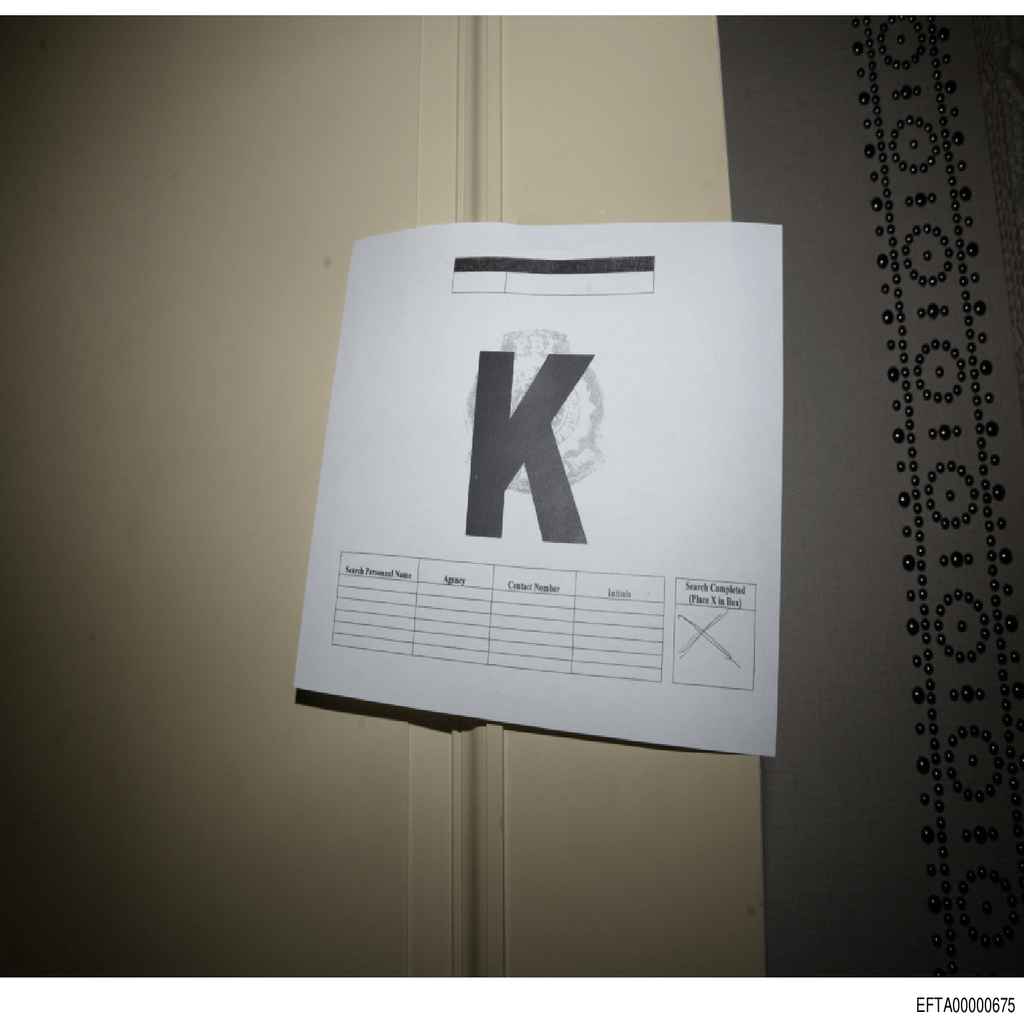
The image captures a close-up view of a paper document affixed to a wall, primarily featuring a prominent, oversized letter "K" displayed in a bold, black font, creating an immediate focal point. This large letter is printed on a plain white sheet of paper, contrasted sharply against the subtle beige background of the wall, which provides a neutral canvas that emphasizes the starkness of the letter. Below the bold letter, the document contains several blank fields arranged methodically in a table format, suggesting an organized approach to data collection or reporting. The visible headers of these fields include "Search Personnel Name," "Agency," "Contact Number," and "Initials," all of which hint at a structured process, likely related to some form of investigative or operational protocol. To the right of the table, there’s another section indicating “Search Completed (Place X in Box),” accompanied by a checkbox marked with a distinctive cross, indicating completion of a task or process. This small checkbox adds an element of function to the otherwise straightforward design of the document. The setting appears to exhibit confidentiality or procedural significance due to the serious and formal nature of the content displayed. Additionally, the lighting in the image suggests a slightly shadowy environment, contributing to the overall serious tone. Behind the document, the wall features a decorative strip, adorned with a pattern of circular metallic studs, which separates two different wall surfaces — enhancing the visual complexity of the scene. The blend of this structured, functional documentation alongside aesthetic details creates an intriguing juxtaposition, leading the viewer to ponder the purpose of the displayed sheet and its significance in a broader context, possibly related to law enforcement, corporate procedures, or some form of organizational management. The entire arrangement encourages curiosity and raises questions about the relevance and intent behind the letter "K" and its associated tasks, leaving the observer to speculate on the underlying narrative that connects the document to its surrounding environment.