Epstein File EFTA00000703.pdf 2026
Description
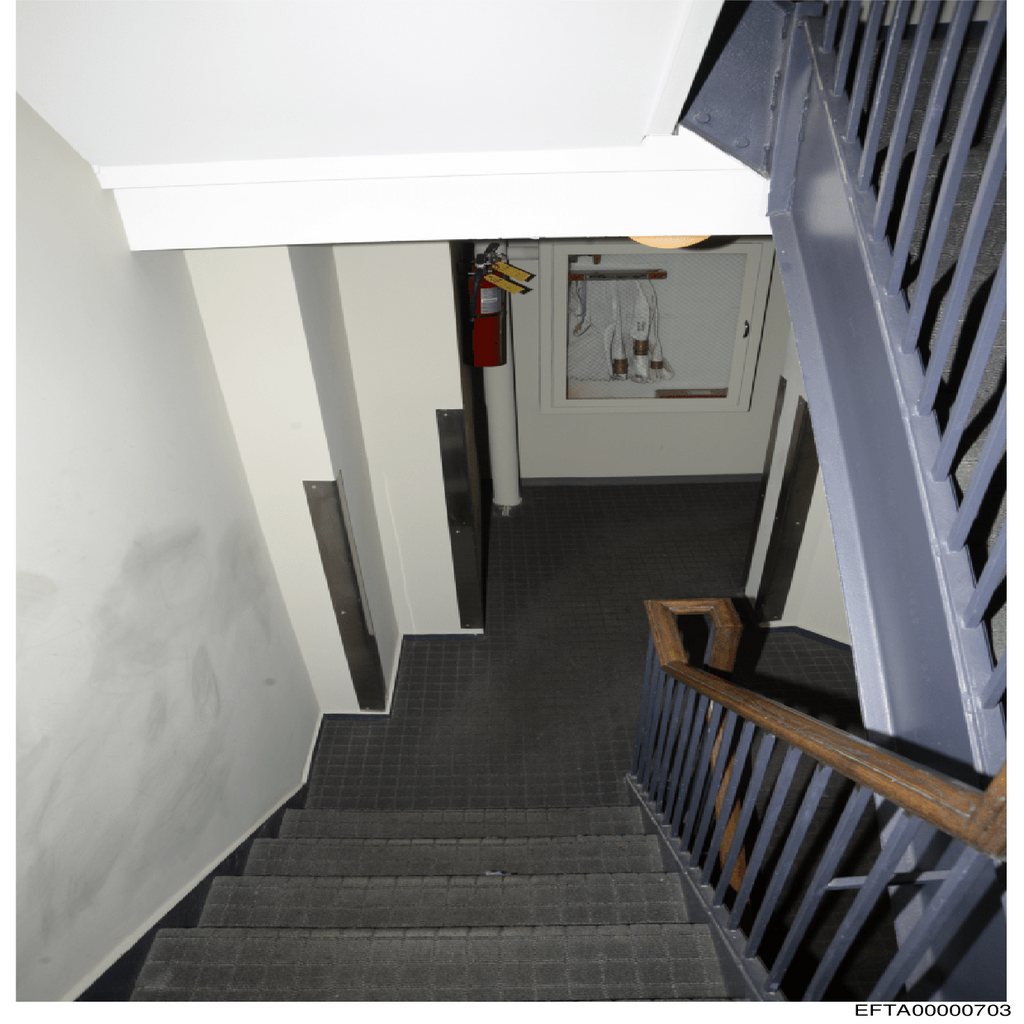
The image presents a view of a stairwell, characterized by its functional architecture and a combination of safety features. Looking downwards from a high vantage point, the scene is dominated by a carpeted staircase made of gray, textured material, which provides an essential grip for safety as individuals navigate the stairs. The stairway's structure, composed of sturdy, uniform steps, leads downwards into a hallway with muted, light-colored walls, creating a stark contrast that enhances the visibility of the stairway. The railing, a combination of dark metallic elements and a wooden handrail, adds an element of comfort and safety, suggesting the importance of design aesthetics in public or semi-public areas. Additionally, the walls adjacent to the stairwell exhibit signs of wear with light smudges or markings that hint at the higher foot traffic typical in this space, reflecting the dynamics of a busy environment. At the foot of the stairs, an open doorway leads into another room, observable through a glass window featuring safety mesh, providing a glimpse into what lies beyond. Within this adjacent room, one can see more safety equipment, specifically a red fire extinguisher prominently mounted on the wall; this detail emphasizes the building's adherence to safety regulations. The mounting hardware of the fire extinguisher is clearly visible, which indicates accessibility for emergency situations. Light fixtures are strategically placed to illuminate the stairwell adequately, offering a sense of security, and a circular ceiling light adds a warm glow that complements the otherwise neutral tones of the walls. The entire scene captures a moment frozen in functional architecture, merging aesthetics with safety. The absence of people in the frame invites the viewer to imagine the stories linked to this location while the design elements reflect practical usage and emergency preparedness, embodying modern building safety codes and design principles. This stairwell, while seemingly simple, encapsulates the daily activity of individuals who traverse these steps, underlining the importance of design in facilitating movement within structured environments. The different materials, such as metal in the railings contrasted with the soft texture of the carpet, serve to create not only a safe but a visually appealing passageway that connects various areas of the building, contributing to its overall functionality and user-friendly approach. Overall, the image offers a wealth of details, from construction materials to safety apparatuses, providing a vivid understanding of this everyday architectural element that often goes unnoticed yet plays a critical role in building design and user experience.