Epstein File EFTA00000719.pdf 2026
Description
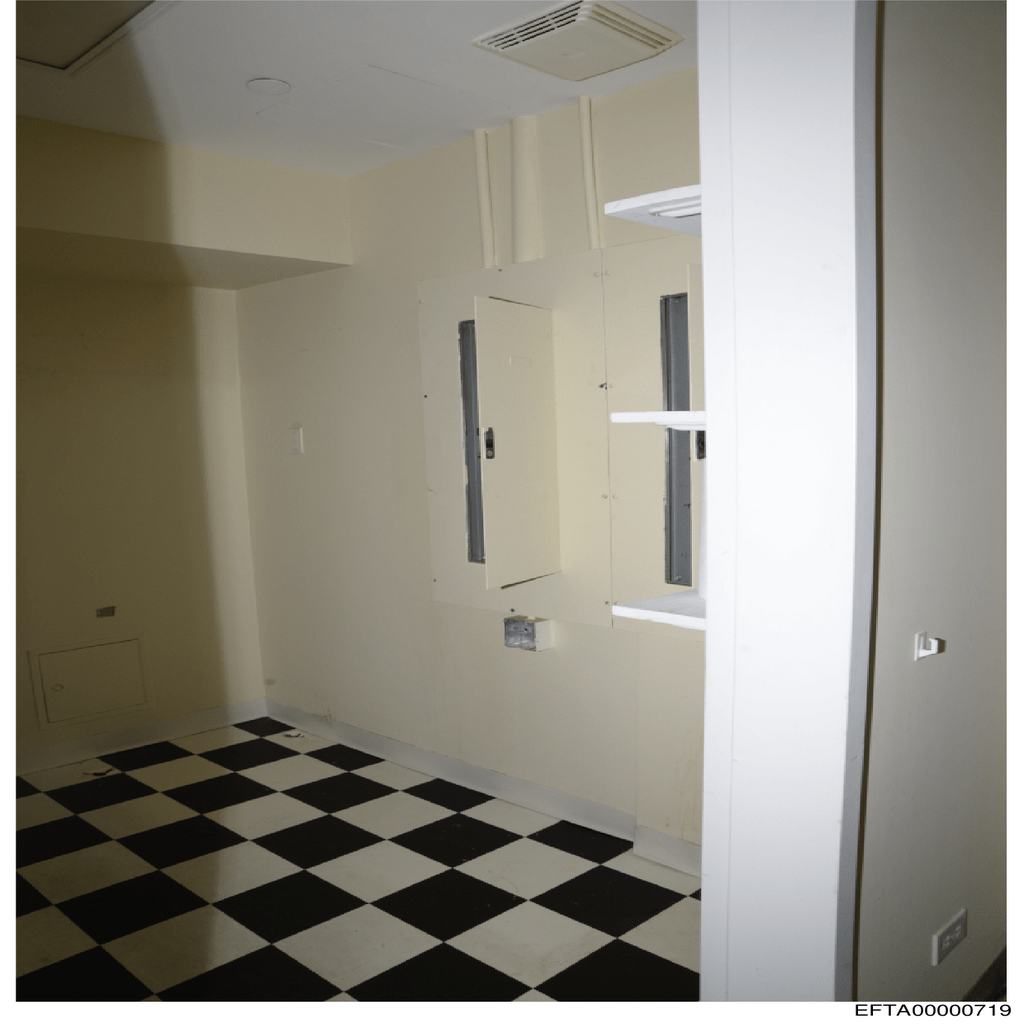
The image captures the interior of a small, sparse room characterized by its minimalist design and neutral tones, primarily shades of beige and black. The room features a notable black and white checkered tile floor, showcasing alternating squares that create a visually striking pattern beneath the soft lighting. In the background, one can observe the plain beige walls, which add a sense of simplicity and calmness to the overall ambiance of the space. On the right side of the image, a white panel protrudes from the wall, containing narrow, open shelves that suggest functionality and organization. These shelves offer potential for storage or display items, enhancing the room's utility. Adjacent to this shelf unit, there exists a wall-mounted compartment resembling a small cabinet, equipped with a secured door that hints at its private nature; this element could serve as a storage space for tools or miscellaneous items, emphasizing the room's practical design. To the left, another wall-mounted feature appears, possibly another cabinet or electrical access point, further indicating the room's multi-purpose capabilities. The ceiling features a simplistic design, with an air vent placed centrally, ensuring adequate airflow. The overall setting, devoid of decoration or furniture, presents a blank canvas, inviting creativity and personal touches. This minimalist aesthetic, combined with thoughtful structural elements, suggests a potential utility for various purposes, be it storage, a workspace, or an organized area. With its functional yet understated elements, the room embodies an essence of practicality and simplicity that can be adapted to meet different needs and serve different functions within a larger architectural context. The combination of the geometric floor pattern and the clean lines of the walls creates a striking visual interest, while the soft color palette reinforces a sense of calm, making it suitable for a variety of applications, from a utility room to an artist's studio, while remaining open to interpretation and future design possibilities.