Epstein File EFTA00000721.pdf 2026
Description
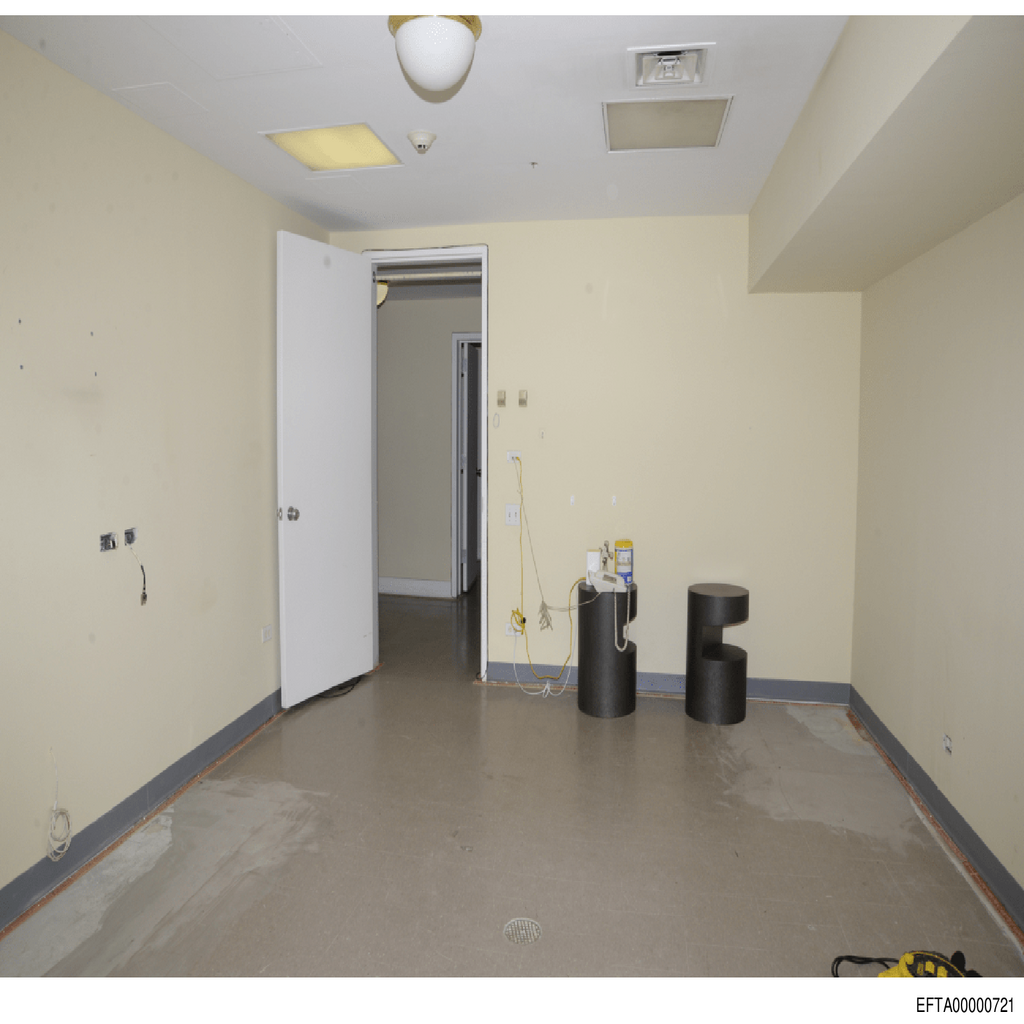
The image presents a spacious room characterized by a muted color palette, primarily featuring light yellow walls that emit a warm ambiance, contributing to a sense of openness and tranquility. The floor is composed of a smooth, grayish surface with patches that suggest recent renovations or repairs, particularly noticeable in the area adjacent to the wall where the gray material appears slightly uneven, indicating ongoing work. Directly in front of the viewer, there is a circular floor drain, which hints at possibilities for plumbing installations, perhaps alluding to the room's previous use or future intended functionalities. To the left, there is an open white door that leads into an adjoining space, allowing for glimpses of additional interior architecture that suggests a hallway beyond, decorated with off-white walls and consistent flooring. On the wall beside this door, two small light switches are installed at an accessible height, offering easy control over lighting fixtures. Above, a round ceiling light fixture suspended from the ceiling provides illumination, complemented by a yellow-tinted square fluorescent light panel that enhances the room's brightness while contributing to the sterile, clinical feel of the environment. Adjacent to the door frame is a grouping of electrical outlets and exposed wiring, emphasizing the room's unfinished or semi-renovated condition, while a coiled yellow electrical cord trailing across the floor suggests ongoing electrical work. The right side of the room features a small black cylindrical table, which is staggered in design, adding a modern aesthetic touch contrasted against the otherwise neutral background. It's positioned in a way that indicates it may serve as a convenient surface for multiple purposes, possibly for use in meetings or as a pedestal for decorative elements. Overall, the combination of functional elements such as doors, light fixtures, and electrical fittings, along with the minimalist furnishings, creates a versatile atmosphere that can adapt to various uses, whether it be as an office, meeting room, or other types of functional spaces. The lack of decorative accessories combined with the utility-focused design offers a blank canvas for occupants to personalize the setting according to their needs. This vacant environment, as seen through the lens of construction or remodeling, allows for a glimpse into the potential that lies ahead, inviting speculation about how the transformation will unfold as it evolves into a fully realized and furnished space. The overall aesthetic remains understated yet carries an underlying potential for creativity and functionality, embodying both modernist design principles and practical utility within a professional context. As the viewer observes, they are left to contemplate the myriad ways in which this simple, bare room could be brought to life through the addition of personal elements, designs, and intended purposes, making it a dynamic locus for future interactions, work, and discovery.