Epstein File EFTA00000741.pdf 2026
Description
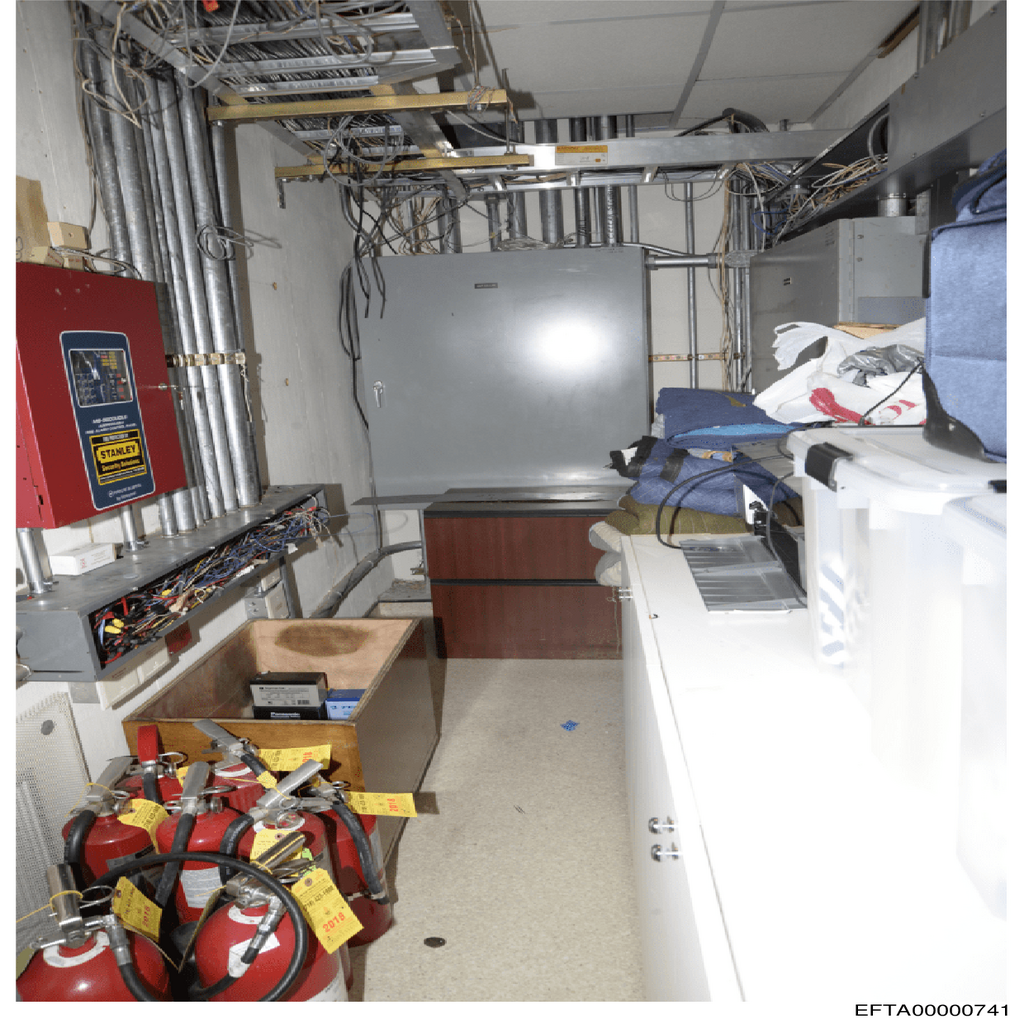
The image depicts a compact utility room or maintenance space characterized by a somewhat cluttered yet functional layout, featuring an array of essential equipment and fixtures indicative of industrial or commercial use. Upon entering, one immediately notices the presence of metallic conduits and wiring that snake along the walls and ceiling, illustrating a complex network of electrical systems. These various pipes and cables contribute to the room's industrial atmosphere while hinting at the infrastructure that supports the various machines and devices housed within the space. To the left side of the room, a prominent fire alarm panel in a striking red color attracts attention, labeled with safety instructions and a warning alert, underscoring the importance of safety measures in this environment. Adjacent to this panel, an assortment of colorful wires and cables emerges from a wall-mounted panel, indicating the electrical connections that power the equipment in the vicinity. Strategically placed along the left wall are multiple fire extinguishers, which share a uniform red appearance, each clearly labeled with identification tags that are essential for compliance with safety regulations. These extinguishers, positioned within arm's reach, suggest a proactive approach to fire safety and preparedness, critical in any facility where machinery functions. The floor is covered in a neutral-toned material, likely resilient linoleum or tile, designed to withstand the wear and tear of an industrial setting while facilitating easy cleaning. To the right, the wall features shelving space that is partially obscured by an assortment of folding blankets and bags carelessly stacked, hinting at a lack of organization but still maintaining utility. Among this jumbled collection are various items that may serve practical purposes, illustrating the room's multifunctional nature. Prominently positioned towards the rear of the space is a dull grey cabinet that likely serves as storage for tools or supplies essential for maintenance tasks. The cabinet's surface subtly reflects light, providing a metallic sheen against the otherwise muted backdrop. In close proximity, a wooden storage box with a slightly worn appearance reveals its contents, which are not entirely visible but suggest a repository of spare parts or equipment. This wooden box, with a history of use indicated by scuff marks and a dusty exterior, complements the functional essence of the room. Further along the right side of the room, a streamlined, white surface appears to be a countertop or table that supports various items, its finish suggesting a durable material designed for rugged use. Overall, this utility room stands as a testament to the intersection of safety, functionality, and practicality within an industrial or commercial framework. Its layout and contents encapsulate the necessary components and considerations that define a space dedicated to maintenance, underscoring a commitment to operational efficiency while prioritizing safety, as evidenced by the presence of fire extinguishers and alarms. The combination of clutter and organization reflects the dynamic nature of such environments, where the needs for both immediate access to tools and equipment coexist. The careful arrangement of wires, safety devices, and storage solutions illustrates the ongoing balance between utility and safety within a fully operational maintenance space.