Epstein File EFTA00000748.pdf 2026
Description
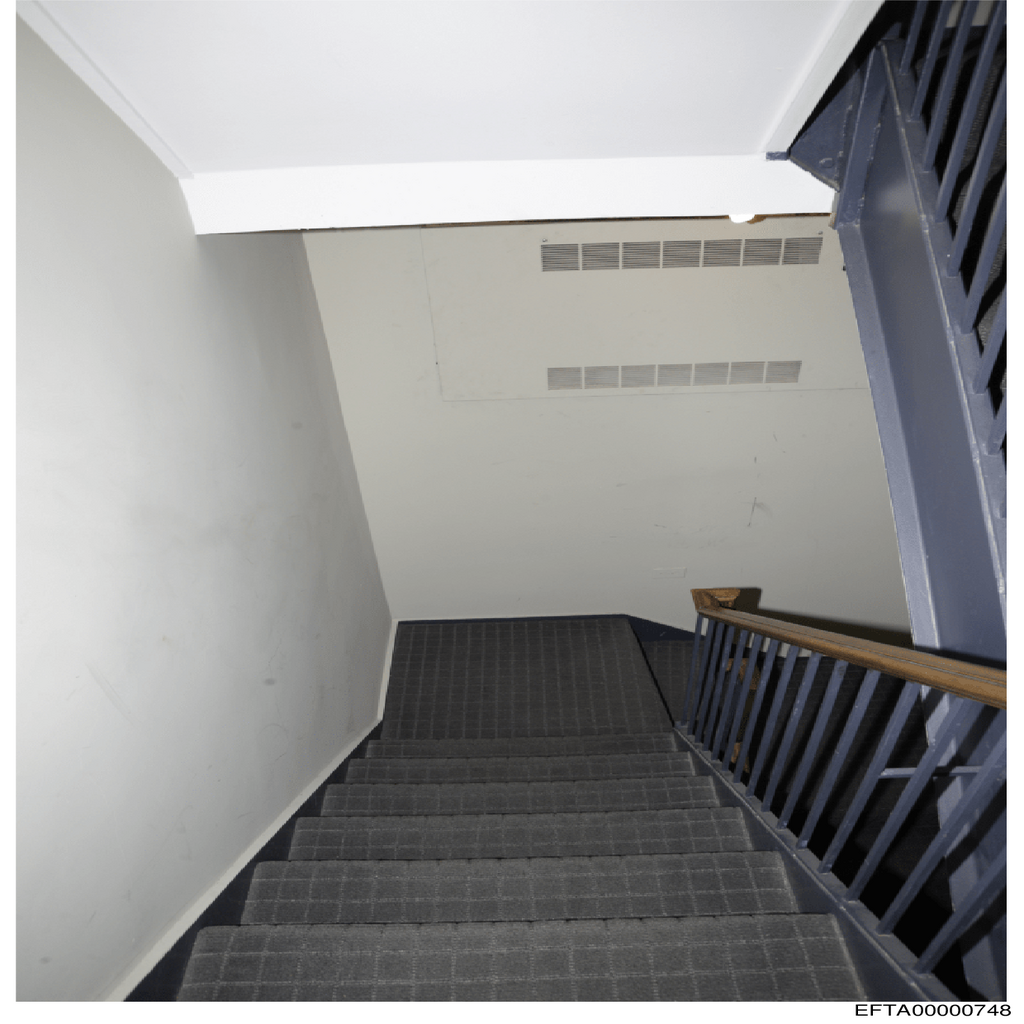
The image captures a perspective view of a staircase leading downwards, illustrating a blend of architectural elements and practical design features typically found in indoor environments, especially in residential or commercial buildings. The staircase is carpeted with a dark gray runner, providing both aesthetic appeal and functional safety, as the textured surface helps prevent slips and falls. Each step is visible, showcasing a series of horizontal treads that descend toward a flat landing area, which is also carpeted in the same dark gray material, maintaining a cohesive visual theme. The walls flanking the staircase are primarily painted in a clean, minimalist white, creating a bright and airy ambiance, while the absence of major decoration or artwork enhances the simplicity of the design. Above, the ceiling is also white, further contributing to the illusion of openness and space in what might otherwise feel like a confined staircase. On the right side of the image, a wooden handrail made of light-colored wood runs parallel to the staircase, providing necessary support for individuals navigating the steps. The contrasting materials of the warm wood against the cooler tones of the carpet and walls create an inviting atmosphere, making the descent feel safe and accessible. The railing features vertical balusters painted in a muted blue-gray, adding a subtle touch of color while maintaining the overall neutral palette of the scene. In the background, the walls show signs of wear, with faint scuff marks and smudges, hinting at daily use and the hustle and bustle of foot traffic. An air vent is visible on the upper wall, indicating the location’s climate control system, suggesting functional aspects that enhance the comfort of individuals using the stairway. This vent not only serves a practical purpose but also adds to the architectural detailing of the space, demonstrating how design elements can be multi-functional. The overall ambiance of the staircase is one of understated elegance, characterized by geometric simplicity and practical design. The scene invites the viewer to imagine the sounds of footsteps echoing softly against the carpet, the gentle air flowing from the vent, and perhaps the muted conversations of those using the staircase. This visual representation speaks to the importance of staircases in both public and private settings, serving as transition points that connect various levels of a structure, facilitating movement while providing a glimpse into the functional beauty of everyday architecture. The clean lines and minimalist design principles embodied in this staircase evoke a sense of modernity and efficiency, appealing to those who appreciate contemporary interior design. The thoughtful use of color and material in this staircase exemplifies a harmonious balance between form and function, making it a noteworthy representation of interior architectural elements commonly found in multi-level buildings.