Epstein File EFTA00000755.pdf 2026
Description
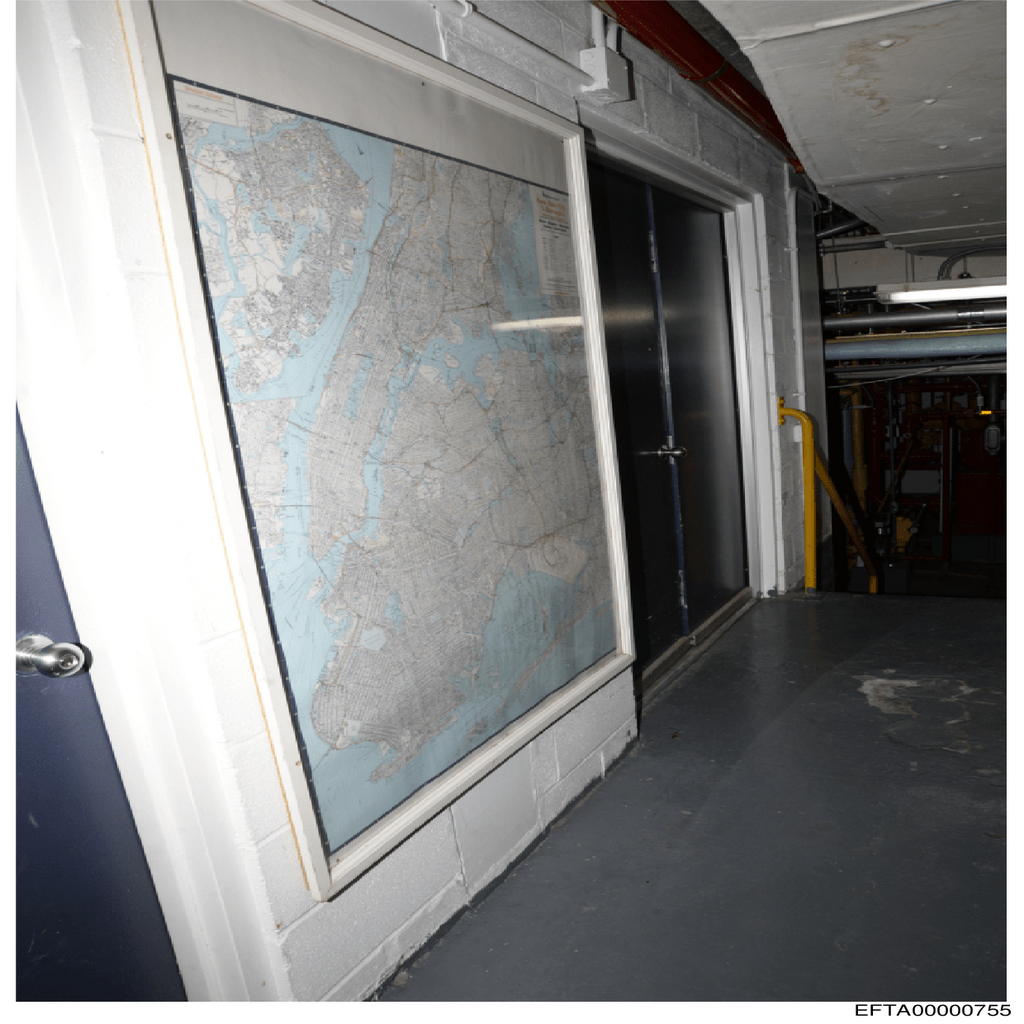
The image showcases a narrow corridor illuminated by artificial light, revealing an interesting juxtaposition of industrial elements and functional decor. On the left side, the walls are constructed of exposed concrete, painted in a subtler hue, while the right side features a sleek, metallic door that is firmly shut. Adjacent to this door hangs a large, framed map of a densely populated urban area, likely depicting a section of a major city, given the intricate network of streets and bodies of water. This map, marked by its detailed lines and symbols, offers an overview of the area's geography, showcasing streets, parks, and possibly landmarks, all meticulously rendered in muted colors that reflect its age. The glass that protects the map is slightly reflective, adding depth while filtering the overhead light, creating the impression of layers as you peer into the details. The map’s worn edges suggest it has been a fixture in this corridor for a considerable time, possibly conveying a sense of history and navigational utility. The flooring is a smooth gray, punctuated by some signs of wear and tear, hinting at the corridor’s high traffic and practical purposes. To the right of the corridor, industrial piping and structural beams are partially visible, suggesting an operational environment, perhaps related to utilities or maintenance. A yellow pipe emerges from the wall, standing in stark contrast to the cold metallic hues, its bright color serving as a safety feature along this passageway. The overall atmosphere is functional yet informative, emphasizing a space that balances everyday industrial use with the contextual storytelling offered by the large map, which evokes a sense of exploration and navigation through the urban landscape depicted. The corridor, map, and surrounding elements combine to narrate a chapter of an operational area, possibly within a facility dedicated to infrastructure, utilities, or transportation, where knowledge of the geographic layout is both essential and ever-present. The detailing of the map invites viewers to consider journeys taken, the routes explored, and the histories inherent in the locations marked upon its surface. A connection to urban life is evident, giving this simple corridor a narrative weight that transcends its immediate functionality.