Epstein File EFTA00000771.pdf 2026
Description
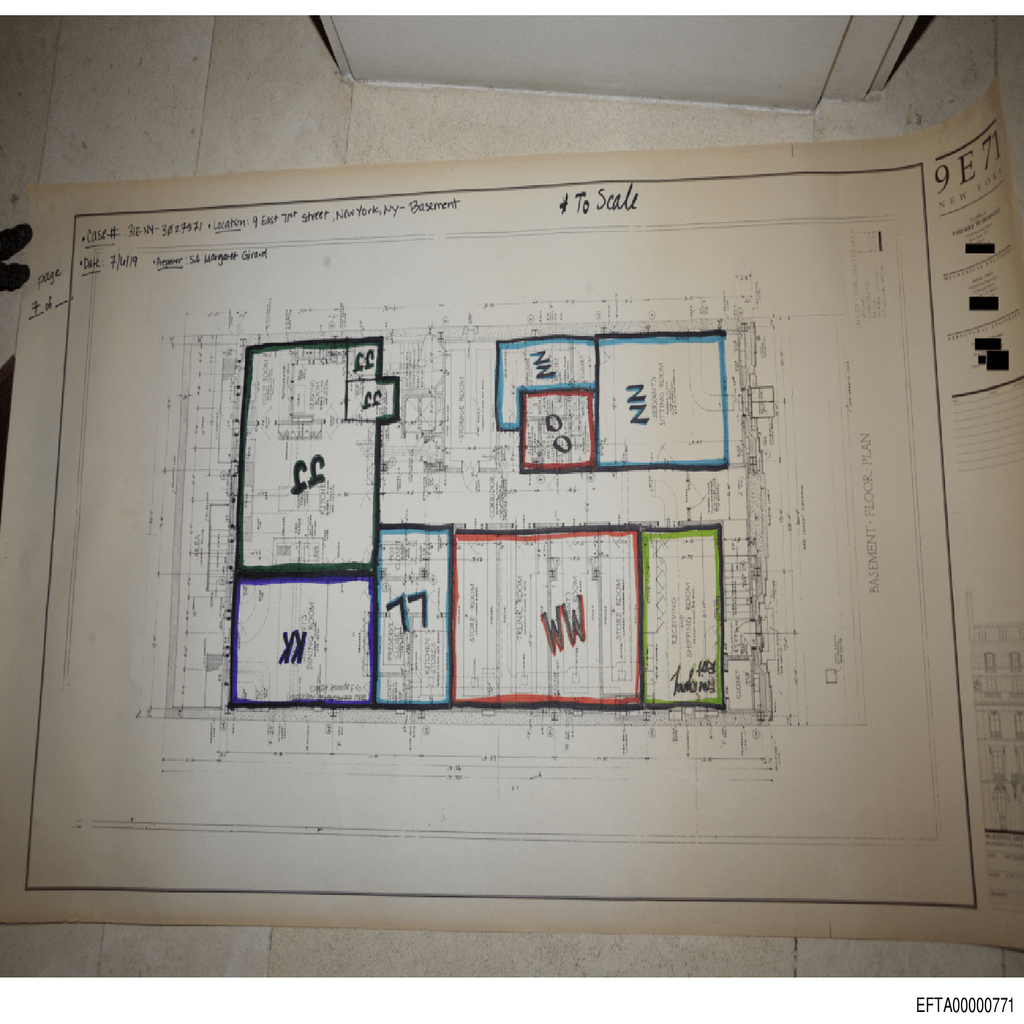
The image presents a detailed architectural floor plan, specifically for the basement level of a building located at 9 East 18th Street, New York, NY. Dated July 19, the document is marked “To Scale” and exhibits a meticulous layout that features various sections denoted by colored outlines—green, red, blue, and purple—identifying distinct areas within the space. The plan conveys a clear arrangement of rooms and compartments, which include labeled spaces with designated square footage, such as the room labeled "33," featuring ample measurements, possibly indicating its use as a living space or storage. The layout also highlights other areas denoted by codes like "NN" and "MW," hinting at potential utility rooms or amenities, contributing to the overall functionality of the basement. The presence of marked dimensions implies careful planning and architectural consideration, ensuring that each room adheres to building regulations while optimizing the use of space. Surrounding the main design, textual annotations provide essential information about the plan, including reference numbers and notations that may specify construction details, permitting those involved in the project to access critical insights during execution. The overall quality of the drawing emphasizes precision in the representation of walls, doors, and windows, with clear lines and room labels enhancing navigability within the plan. Despite being a basement plan, the intricate detailing suggests a thoughtful approach to design, as it accommodates aspects like plumbing and ventilation systems, which are essential for a comfortable environment. Furthermore, the clear organization and visual layout of this basement floor plan serve not only as a blueprint for construction but also as a guide for interior design and architectural discussions, facilitating collaboration among architects, engineers, and contractors. The base surface appears to be tiled, indicating a clean workspace conducive for reviewing blueprints. This floor plan encapsulates the essence of urban architecture in a dense area like New York City, where efficient space utilization is paramount. The document reflects the complex intersection of functionality, aesthetics, and regulatory compliance inherent in modern design practices, making it a crucial element in the development and renovation of city buildings. The various sections of the blueprint suggest careful compartmentalization, resulting in a multipurpose environment that could cater to different needs within a single unit. Each colored and labeled section offers an insight into the intended utility of that space, enhancing the planning and organizational aspects of the project while addressing the demands of residential or commercial living. Overall, this basement floor plan serves as a foundational document that encapsulates urban planning’s nuances, blending technical precision with creative intention, ensuring that future occupants will experience a designed space that is both functional and reflective of contemporary architectural standards.