Epstein File EFTA00000772.pdf 2026
Description
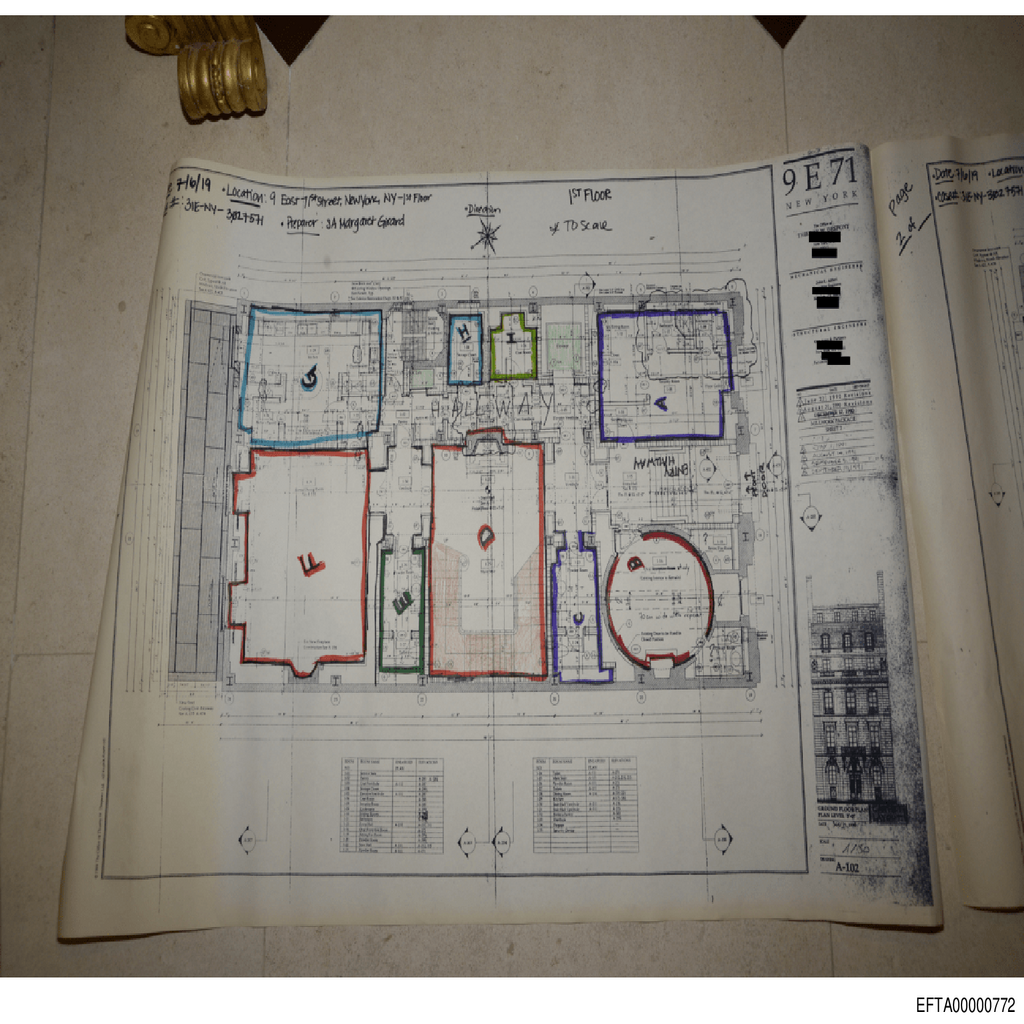
This detailed architectural blueprint represents the first floor layout of a premises located at 9 East 71st Street in New York City, specifically designed for meticulous planning, renovation, or construction purposes. The document is filled with diverse symbols, dimensions, and notations that outline various rooms and spaces within the structure. The blueprint features carefully delineated areas, highlighted in vibrant colors including blue, green, red, purple, and black, each indicating specific functions or planned alterations to various sections of the property. Key elements of the plan include living spaces, possible utility or storage areas, and other functional rooms that suggest a blend of personal and communal uses. This floor plan showcases a total area distribution that reflects the thoughtful design approach, aimed at maximizing space utility while ensuring fluid mobility throughout the layout. The main focal points of the architecture vary from large open areas that can serve as gathering spaces to more enclosed rooms that prioritize privacy, perhaps indicating bedrooms or offices. Additionally, there are annotations such as “MATH” and “LIVING ROOM,” along with symbols that represent doors, windows, and furniture configurations, providing insight into the intended function of each designated area. Architecturally significant details can be inferred from the plan, showcasing the building's overall aesthetic flow, as each section connects seamlessly yet serves distinct purposes. The inclusion of a circular area suggests a possible dining or entertainment space, adding an element of versatility and charm to the layout. Measurements are noted throughout, emphasizing the precision required for successful execution. Beneath the main blueprint, a detailed legend lays out a comprehensive list of materials or specifications necessary for construction, outlining plumbing, electrical placements, and potentially structural elements that support the building’s integrity. The upper corner includes a compass rose indicating directional orientation, which is vital for understanding how natural light might interact with interior spaces. At the edge of this meticulous design, faint printing denotes historical features or previous assessments connected to the building, which aids in retaining its architectural heritage while possibly modernizing its utility. Finally, the plan captures a snapshot of urban living possibilities in New York City, transcending mere lines and measurements to portray a vision of a vibrant community space tailored to the needs of its inhabitants. The meticulous nature of this layout, with its combination of practical functionality and aesthetic consideration, forms an essential document for stakeholders, architects, and builders engaged in the creation or renovation of this significant property.