Epstein File EFTA00000774.pdf 2026
Description
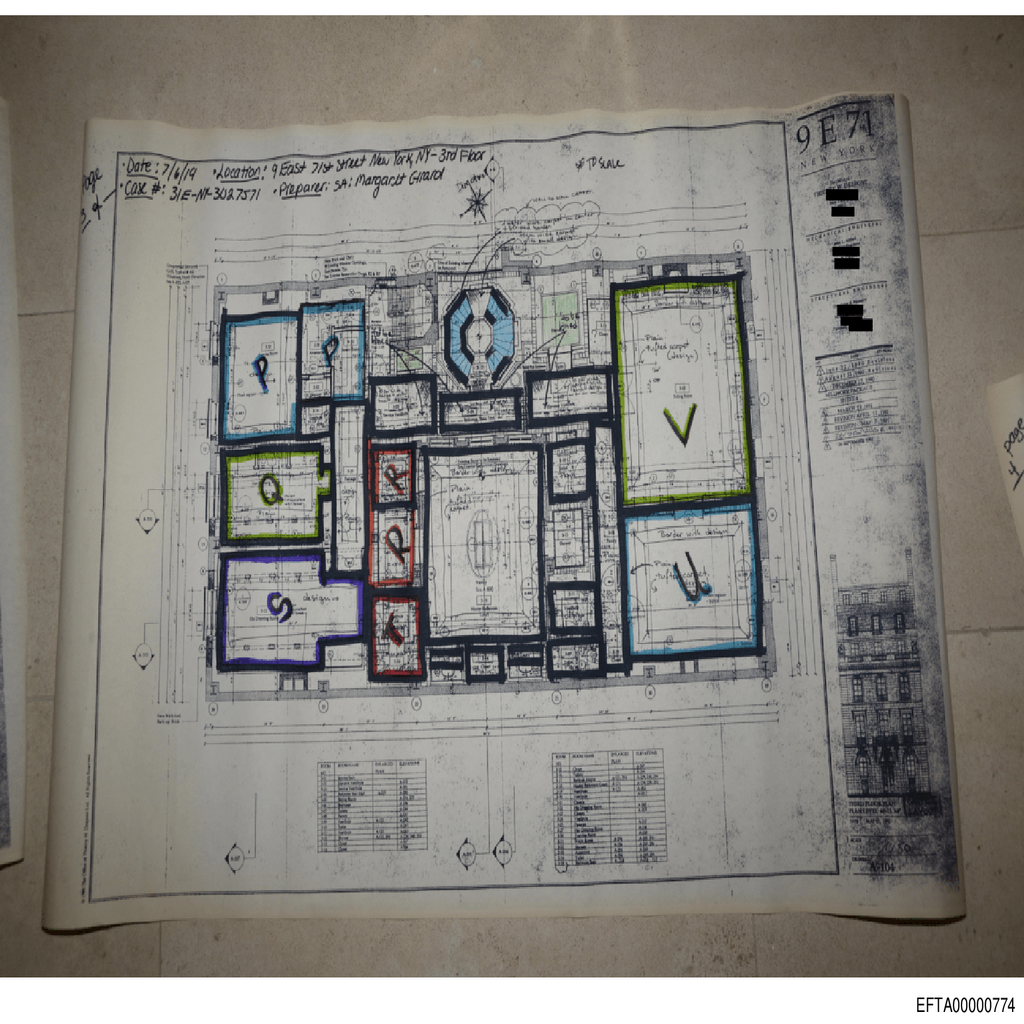
The image features a detailed architectural blueprint or floor plan showcasing the layout of a space, specifically identified as located at 925 7th Avenue, New York, NY, on the third floor, dated July 7, 2019. The blueprint is filled with an intricate network of lines and symbols, revealing various rooms and functional spaces within the building. The floor plan is delineated with a series of color-coded outlines—blue, red, green, purple, and black—indicating different areas or purposes such as offices, common areas, and bathrooms. Close examination reveals a central octagonal shape marked prominently, possibly indicating a lobby or communal gathering space, surrounded by diverse rooms labeled with letters and icons that suggest varied uses, such as a kitchen or meeting areas. Notably, the annotation includes a directional symbol that might indicate entrances or exits, contributing to the navigability of the space. The presence of comprehensive dimensions and room specifications at the bottom of the blueprint suggests thorough planning and careful consideration of space utilization, featuring essential details like room sizes and other related measurements crucial for construction and design. Additionally, there are handwritten notes and markings scattered across the blueprint, indicating potential design considerations or amendments made by the preparer, who is identified as Margaret Gland, along with a code number on the document. The paper itself exhibits a degree of wear, hinting at its practical use in planning or discussions. In the context of architectural layouts, this document serves as a crucial artifact for both historical reference and practical implementation, encapsulating a moment in the design process of commercial real estate, making it a valuable resource for architects, interior designers, or urban planners interested in space planning and design evolution within a bustling urban environment like New York City. Overall, the image conveys a wealth of information about the spatial arrangement and functionality of the area, rich with potential for future occupants and inviting further exploration into its design narrative.