Epstein File EFTA00000792.pdf 2026
Description
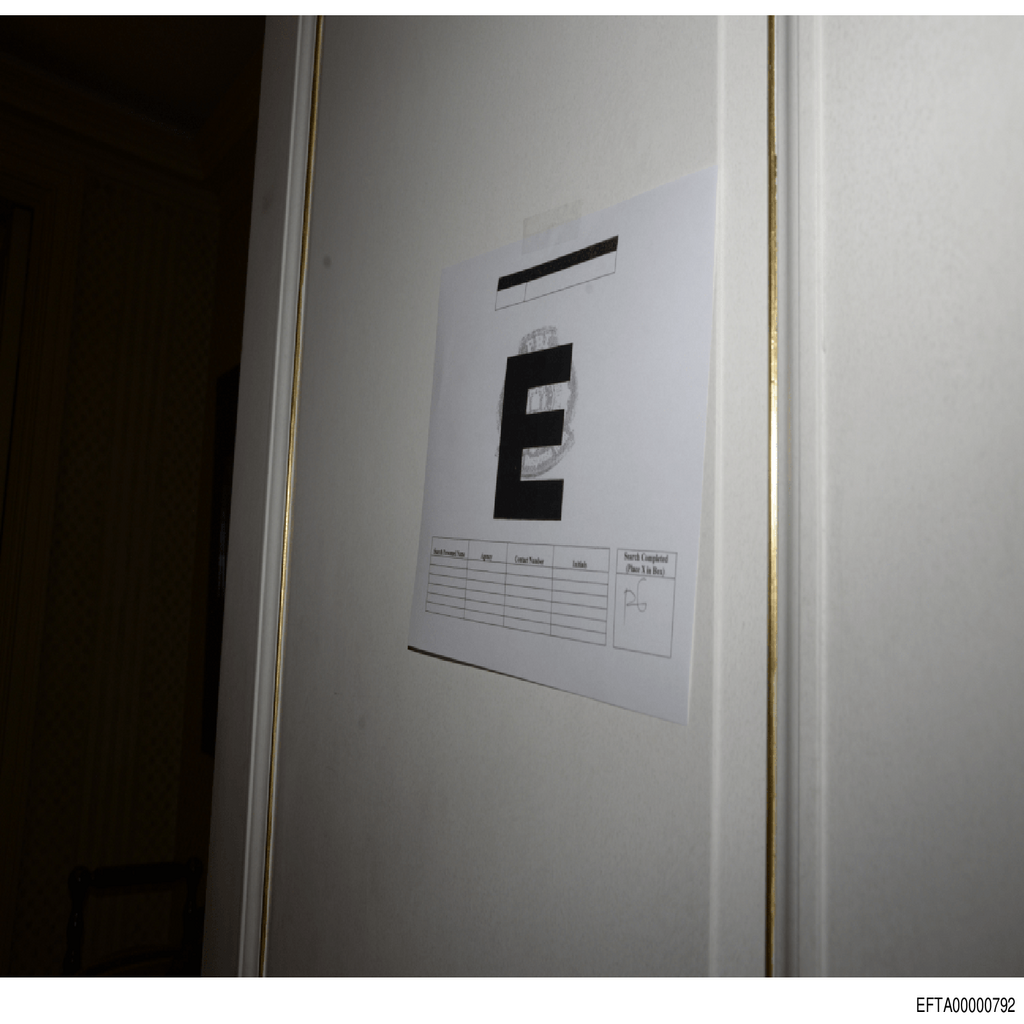
The image presents a close-up view of a white door, elegantly detailed with a narrow, shiny golden trim that runs alongside the door's edge, enhancing its refined aesthetic appeal. Affixed to the door, prominently displayed for visibility, is a piece of paper featuring a large, bold black letter "E," the letter's size and dark coloration creating a striking contrast against the pristine white background. The lower section of the page contains lines formatted for filling out details such as "First Name," "Last Name," "Logins," "Contact Number," and "Notes," suggesting it serves a functional purpose, perhaps related to organizational or administrative tasks. Above the large letter "E," there’s an additional narrow dark line, indicating a section that may be designated for a title or category, though this space remains unfilled. This form appears to be either a checklist or a declaration paper, hinting at a systematic approach to tracking information, possibly within a workplace, educational, or event context. The paper is elegantly secured to the door with a piece of transparent tape, demonstrating a simple yet effective means of attachment that combines functionality with minimalism. The background is slightly blurred, giving the sense that the focus is intentionally directed towards the paper and its bold lettering. The overall composition is characterized by a blend of practicality and artistic minimalism, as the stark contrast, clean lines, and orderly arrangement evoke a sense of clarity and preparedness. The setting, likely indoors, may suggest a temporary workspace or a conference area, hinting at an environment where information exchange and communication are paramount. The presence of the letter "E" raises curiosity regarding its significance, potentially representing a starting point for a deeper narrative or as a symbolic representation within a broader context. This visual arrangement encapsulates elements of structure, function, and aesthetic simplicity, making it a noteworthy focus for those interested in design, administration, or visual communication strategies. The paper, with its bold design and practical layout, invites viewers to question its purpose, encouraging engagement and reflection on themes of organization and prioritization within various professional or educational frameworks.